This post may contain affiliate links. Please read our disclosure policy.
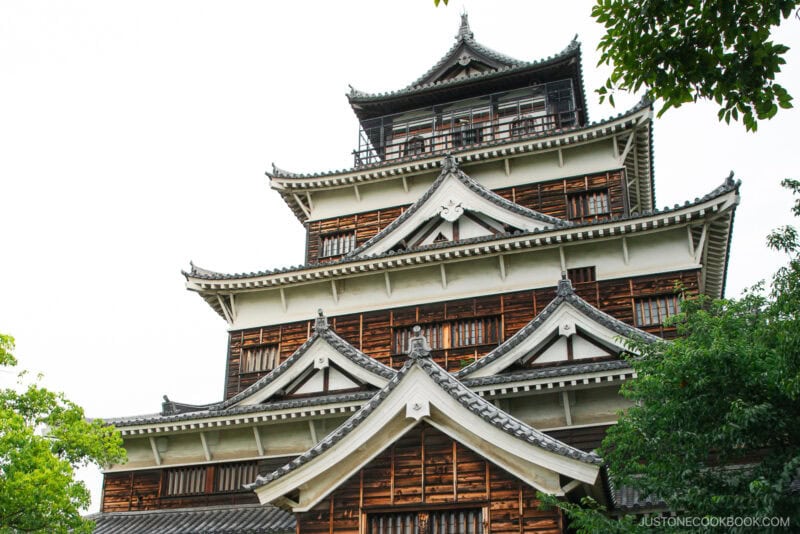
Rich in history and resilience, Hiroshima Castle showcases traditional architecture and unmatched views over Hiroshima.
A Symbol of Resilience and Feudal History
One of our favorite ways to experience Japan’s history is by visiting castles. Upon arriving in Hiroshima, we started with a visit to Hiroshima Castle. Known as “Carp Castle,” this reconstructed fortress stands as a quiet but powerful symbol of the city’s past and its strength in the face of tragedy.
Originally built in 1589 by powerful warlord Mori Terumoto, Hiroshima Castle once served as the political and military center of the region. Unlike mountaintop castles, it was built on flat land, protected by wide moats and the nearby Otagawa River. The castle was completely destroyed by the atomic bomb in 1945, but it was faithfully reconstructed in 1958.
Highlights of Hiroshima Castle
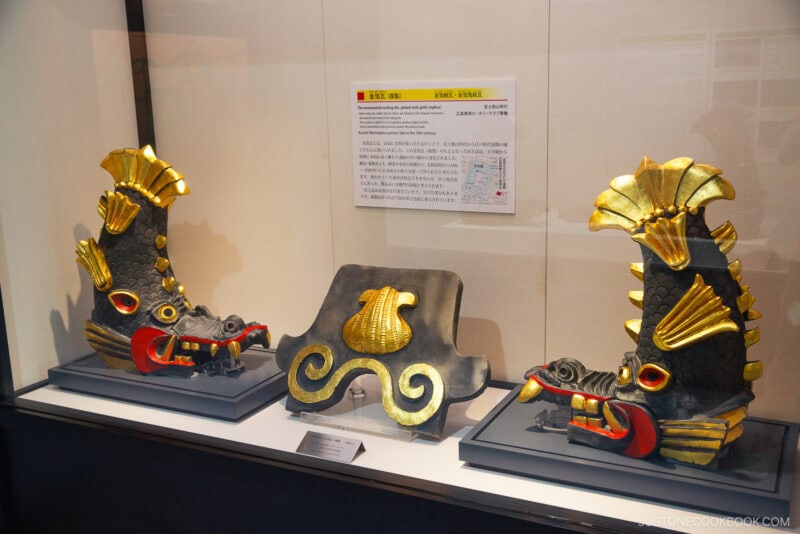
Step Inside the Main Keep Museum
The five-story main keep now serves as a history museum. Each level focuses on a different part of the city’s past:
- 1st Floor: A look at the castle’s origins and early Hiroshima
- 2nd Floor: Daily life in the castle town
- 3rd Floor: Armor, weapons, and samurai culture
- 4th Floor: Special rotating exhibitions
- 5th Floor: An observation platform with panoramic views
Take in the Views from the Top
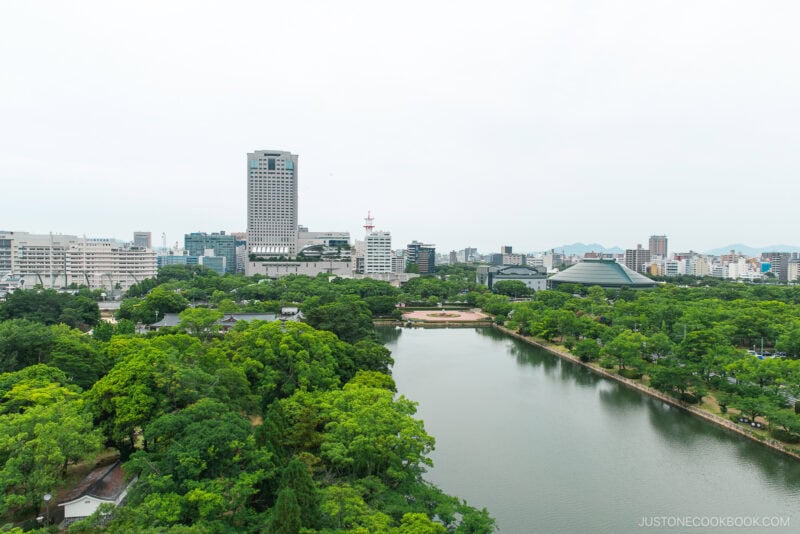
The top floor of the keep offers sweeping views over Hiroshima. We could see the Peace Memorial Park in the distance, framed by green treetops and city buildings.
Walk the Moats and Stone Walls
The castle grounds are calm and scenic, with wide walking paths, original stone foundations, and a reflective moat surrounding the main keep. We enjoyed strolling through the area and soaking in the peaceful atmosphere.
Visit Hiroshima Gokoku Shrine
Located inside the castle grounds, this Shinto shrine honors the spirits of those who died in war. During our visit, we saw locals offering prayers and writing wishes on wooden ema plaques. The shrine is especially popular during New Year and other seasonal festivals.
How to Get to Hiroshima Castle
Tram/On Foot
- From Hiroshima Station, take tram lines 1, 2, or 6 to Kamiyacho-higashi or Kamiyacho-nishi tram stop. The tram ride takes about 12 minutes.
- If walking, the castle is about a 15-20 minute walk directly northwest from the station.
- Total travel time: 15–20 minutes.
Bus
- Hiroshima Sightseeing Loop Bus: This is a very convenient option for tourists, especially if you have a Japan Rail Pass (as it’s covered).
Taxi
- A taxi from Hiroshima Station takes about 10 minutes and costs around ¥1,200–¥1,500.
Pro Tip: It’s just a 15-minute walk to Hiroshima Peace Memorial Park—consider visiting both on the same day.
Is Hiroshima Castle Worth Visiting?
Yes! Especially if you enjoy Japanese history and likes visiting Japanese castles. From its panoramic views to its exhibits and survivor trees, the castle shows how Hiroshima has honored the past while rebuilding for the future.
More to Explore Nearby
After walking the grounds and climbing the keep of Hiroshima Castle, continue exploring the city’s rich historical and cultural landmarks:
- Hiroshima Peace Memorial Park – A powerful tribute to peace with memorials, museums, and the Atomic Bomb Dome.
- Shukkeien Garden – A scenic Japanese landscape garden just a short walk away, known for its ponds, bridges, and seasonal beauty.
- Hiroshima Museum of Art – Featuring both Western and Japanese modern art, located near the castle park.
- Okonomimura – Dive into Hiroshima’s famous okonomiyaki at this multi-floor food hall dedicated to the local specialty.