

This post may contain affiliate links. Please read our disclosure policy.
A rainy day in Tokyo can still be fun. These are my favorite indoor spots, cozy walks, and relaxing baths for when the skies turn gray.
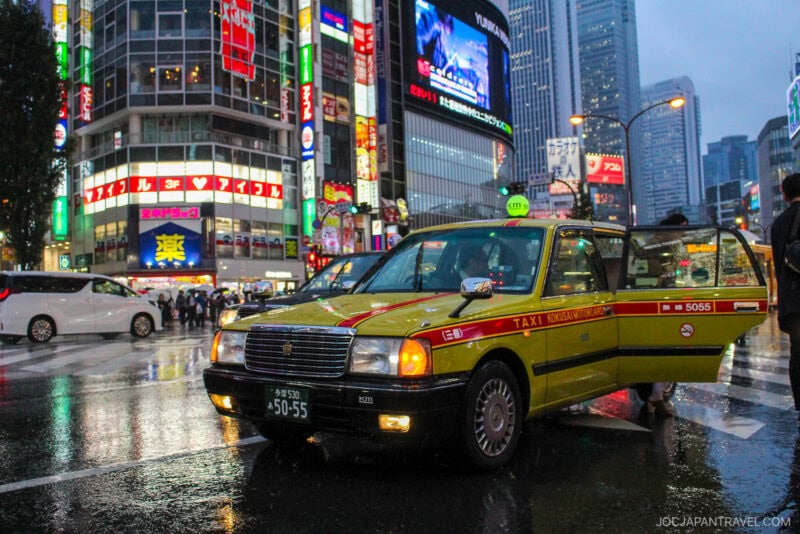
You’ve just landed in Tokyo, and the weather has taken a turn for the worse. Don’t worry, it’s not the end of the world! There are still plenty of things to do and see around the city to keep you entertained. We have compiled a list of activities and entertainment spots that we recommend if you find yourself stuck in the rain.
When Is Japan’s Rainy Season?
Japan’s main rainy season is called tsuyu. In Tokyo and the Kanto region, it usually starts in early June and lasts until around mid July, although the exact dates change a little every year.
During tsuyu, you can expect humid days, light drizzle, and occasional heavy downpours, but it is not always nonstop rain. There are also clear breaks in the weather, so I plan flexible days and keep some indoor ideas ready just in case.
Enjoy The Rainy Atmosphere
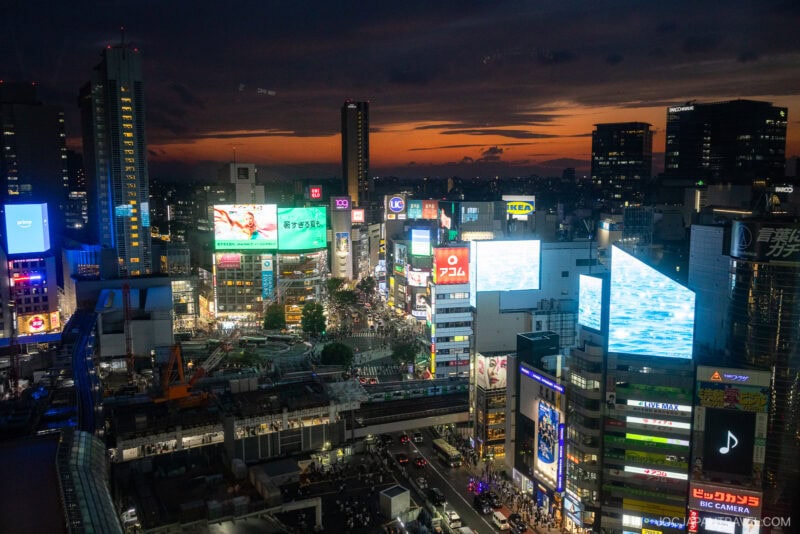
Tokyo in the rain has a special mood, so as long as it is safe, I like to go out and enjoy it. I pick up a clear umbrella from the nearest konbini and head for a walk.
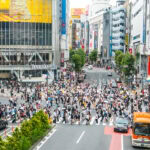
For neon lights and reflections, Shibuya and Shinjuku are my top choices. In Shibuya, I like to start at the 11th floor of Shibuya Hikarie, where there is a free window view over Shibuya Scramble. Watching the umbrellas move across the crossing from above feels almost like a movie scene. In Shinjuku, the streets around the station glow with signs, and small alleys in Golden Gai look atmospheric with steam and rain.
For a calmer mood, I often visit Zojoji Temple near Tokyo Tower. It is large but usually less crowded than Sensoji. On a rainy day, the sound of raindrops on the temple grounds and the view of Tokyo Tower rising behind the main hall make it feel very peaceful.
Go Shopping At Tokyo’s Best Department Stores And Malls
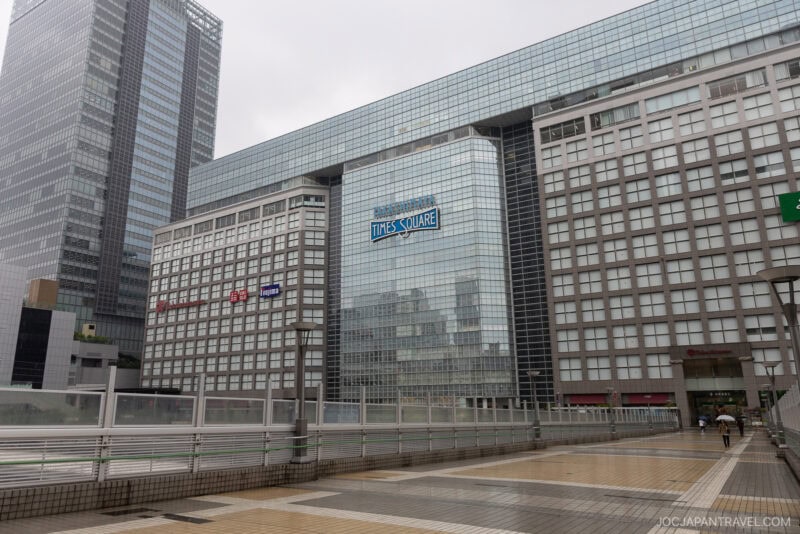
On heavy rain days, big department stores are my first choice because many connect directly to train stations. That means you can spend hours inside without opening your umbrella.
Some good options are Isetan Shinjuku, Mitsukoshi (Nihonbashi and Ginza), Shibuya Hikarie, Daimaru Tokyo, and PARCO in districts like Shibuya and Ikebukuro. Most have several floors of fashion, home goods, and lifestyle shops, plus full restaurant floors.
My favorite part is always the basement food hall, called depachika. These areas are packed with bento boxes, wagashi sweets, tempura, cut fruit, and all kinds of side dishes, displayed like art. I like to walk slowly, buy a few small items, and turn it into a tasting lunch back at my hotel or in a nearby rest area.
Discover Tokyo’s Museums And Art Galleries

Museums and galleries are perfect rainy day activities in Tokyo. There are many choices, but a few I often recommend are:
- Tokyo National Museum (Ueno) A classic stop with more than one hundred thousand items in the collection and many designated national treasures. It is a good place to learn about Japanese history, samurai armor, ceramics, and Buddhist art under one roof.
- Yayoi Kusama Museum (Shinjuku area) This small museum focuses on the life and work of Yayoi Kusama. Ticket numbers are limited and must be booked online in advance, but if you are a fan of her polka dot and pumpkin works, it is worth planning ahead.
- The National Art Center, Tokyo (Roppongi) One of Japan’s largest exhibition spaces, with rotating art shows across several huge galleries. Even if you are not a big art fan, the building itself is impressive, with its glass wave facade and large lobby cafe.
- Mori Art Museum (Roppongi Hills) A contemporary art museum near the Tokyo City View observation deck. The exhibitions change every few months, so there is usually something new to see. On rainy nights, I like to combine an indoor museum visit with the city view from inside the building.
These are only a few ideas. Tokyo also has many smaller museums for photography, design, and local history, which can each fill a half day.
Immerse Yourself At TeamLab Planets Or TeamLab Borderless

TeamLab’s digital art museums are some of the most popular indoor attractions in Tokyo.
teamLab Planets (Toyosu) is an immersive museum where you walk barefoot through water, mirrors, and light installations. The experience is linear, so you follow a set route through different rooms, including spaces where the floor is soft or uneven. It is currently scheduled to stay open until the end of 2027 and recently expanded with new areas like Athletic Forest and Future Park.
teamLab Borderless (Azabudai Hills) reopened in February 2024 in a new location in central Tokyo. There is no fixed path here. Instead, you wander freely as artworks move between rooms and respond to visitors. It feels more like a world you explore than a typical museum.
If you only choose one, I usually recommend Borderless for first time visitors because it is easier to reach from many central hotels. In any case, you should book tickets online in advance, since time slots often sell out, especially on weekends and holidays.
Have Fun At Tokyo’s Arcades And Game Centers

When the rain pours and I want something light and fun, I duck into a game center. These arcades have whole floors of UFO catchers, rhythm games, racing games, and fighting games.
Chains like GiGO and Taito Station have branches in most major districts, including Shibuya, Shinjuku, Akihabara, and Ikebukuro. I like starting with a few crane games, then trying a music game or driving game. It is an easy way to kill an hour while you wait for the weather to calm down.
If you want a full day of indoor activities, ROUND1 is a good choice. Their large complexes often combine arcade games with bowling, karaoke, table tennis, and batting cages. Spo-cha floors, which bundle many activities under one fee, are usually open late and feel like an indoor sports playground.
Step Inside Another World At Immersive Fort Tokyo

Immersive Fort Tokyo is an indoor theme park in Odaiba that focuses on live, story based attractions rather than rides. It is built in the former VenusFort mall and has around twelve different experiences, including mystery stories, horror mazes, and anime based shows.
I tried the Sherlock Holmes attraction, a two hour murder mystery where you walk through sets and follow characters as the story unfolds. The performance is in Japanese, but English audio guides are available for some attractions. The audio covers the main points but not every small detail, so it can still be a bit confusing. Even so, I found it unique and memorable, especially if you already enjoy immersive theater or escape games.
Because ticket types and shows change, I always check the latest information and see which attractions currently support English before booking.
Explore Tokyo’s Traditional Shotengai

Shotengai are traditional shopping streets lined with small stores and food shops. Many are covered, which makes them ideal on rainy days.
One of my favorite covered shotengai is Asagaya Pearl Center. It is not the biggest street in Tokyo, but it has around 250 shops stretched over about 700 meters. In early August, it hosts a famous summer festival where handmade decorations and streamers hang from the ceiling, turning the arcade into a bright tunnel of color.
If you do not mind walking outside between shops, Togoshi Ginza is another great option. It is the longest shotengai in Tokyo, with more than 400 stores. It is especially known for food, including curry bread, karaage, onigiri, and local snacks like oden croquettes. Just off the main street you will find Togoshi Ginza Onsen, a public bath that is known to be friendly to people with tattoos and uses natural hot spring water.
On a rainy afternoon, I like to eat my way down the street, then soak in the onsen before heading back.
Unwind In A Sento Or Onsen
Hot baths feel even better when it is cold and wet outside. In Tokyo you will find both onsen, which use natural hot spring water, and sento, which use heated tap water. Both are relaxing, and both follow the same basic rules: wash and rinse your body first, then soak quietly in the tub.
For large, easy to access facilities, I often recommend:
- Togoshi Ginza Onsen in Shinagawa
- Thermae Yu in Shinjuku
- Spa LaQua at Tokyo Dome City
There are also many small neighborhood sento all over the city. These baths usually cost less and feel more local and intimate. One newer option is the sento inside Tokyu Plaza Harajuku Harakado, which includes different tubs and a relaxed, modern setting.
If you have tattoos, it is important to check each bath’s policy in advance, as some are more flexible than others.
Relax At Daikanyama T-Site

On a slow rainy day, I like to visit Daikanyama T-Site. The low, white buildings are built around Tsutaya Books and feel more like a cozy library than a normal bookstore.
Inside, you can browse thousands of books and magazines on literature, travel, photography, and Japanese culture. There is a Starbucks with seating where you can read by the window while listening to the rain. Upstairs, Anjin Lounge offers a quieter cafe with vintage magazines, coffee, tea, and cocktails.
Daikanyama itself is also a good rainy day neighborhood, with many small cafes and shops close together, so you do not have to walk far in the rain.
Explore Tokyo’s Pop Culture At Nakano Broadway

If you enjoy anime, manga, and collectibles, Nakano Broadway is a classic rainy day stop. This multi floor complex is packed with small shops selling figures, retro games, vintage toys, idol goods, and more.
Most of the anime and hobby shops are on the upper floors, while the lower levels have everyday stores and casual food spots. I like to wander slowly, floor by floor, looking for odd items I have never seen before. It is easy to spend a few hours here while the rain passes outside.
Embrace Rainy Days in Tokyo

Rainy days in Tokyo don’t mean the fun stops! There’s a different kind of magic and side to the city to explore. Whether you’re relaxing in an onsen, exploring digital art, or wandering through old shopping streets, the city has endless indoor activities to enjoy.
Great suggestions, all, of course. A few points I’d add:
Rain here tends to be the kind that umbrellas work well for. Coming from the Southwest, I’m used to umbrellas being worse than useless; in Phoenix, it almost only ever rains during intense monsoon thunderstorm downbursts. We do sometimes get storms in Tokyo, but rain almost always means “grab the umbrella” rather than “run for cover.”
If you’ve lost or forgotten your umbrella, don’t worry. Every conbini (7-11, Lawson, FamilyMart, etc.) has them. But I’d recommend instead getting a compact folding umbrella from Uniqlo (there’s at least one in every train station big enough to have a department store, which is every station in the downtown area and about every third station in the farthest suburbs). They’re inexpensive, sturdy, super quick and easy to put up and fold down, and look good. If you’re into fashion, most bigger department stores will have someplace else that sells upscale umbrellas. Common at tourist hotspots is a chain that sells ukio-e themed umbrellas if you’re into that sort of thing. Asakusa has one; after getting off the subway, follow signs to the Daimon gate, but turn right down the alley when you get to the top of the stairs rather than follow the main street to the gate.
And … museums. Andy didn’t even scratch the surface of the top of the list. If art is your thing, there’s probably nowhere you’d rather be than Tokyo. Ueno alone has three as-good-as-it-gets: the National Museum Andy mentioned; the Museum of Western Art (its courtyard has multiple Rodin sculptures, including the Gates of Hell and The Thinker); and the Metropolitan Art Museum. Plus there’s the National Museum of Nature and Science there. And the Zoo. And the Bunka Kaikan, a major performing arts center.
That’s just Ueno. Other noteworthy museums … Suntory, Yamatane, Nezu, Mitsui, Mitsubishi Ichigokan, the Tokyo Station Gallery … just a partial list of the ones we’ve visited recently …
And of course, don’t forget the performing arts scene. There’re all the genres familiar to westerners, but do yourself a favor and go to a performance of Noh or Kabuki or Bunraku; there’s always _something_ being staged somewhere in town.
All else fails, assuming you have a Suica transit card (and you basically absolutely need one if you’re in Tokyo), just go to the nearest station, pick a track at random, jump on the next train, and see where it takes you.
b&