This post may contain affiliate links. Please read our disclosure policy.
Explore Akan Mashu National Park and Japan’s largest caldera lake – Lake Kussharo in this travel guide.
Hokkaido is the largest prefecture in Japan, covering 32,221 sq mi (83,454 km²), which is twice the size of all of Kyushu! While the central and western regions, including Sapporo, Otaru, and Hakodate, draw most tourists, eastern Hokkaido often goes overlooked. However, this area offers scenery that rivals, and sometimes surpasses, the rest of the island.
Even after living in Sapporo for more than four years, I had never ventured to eastern Hokkaido due to its relative inaccessibility. Friends and colleagues often raved about Lake Akan, known for its Marimo algae, wildlife, hot springs (onsens), and mud volcanoes. Curious, I finally packed my bags for a 2-day road trip, which I’m excited to share with you!
Let’s start with Day 1 of this two-part guide to Eastern Hokkaido in Akan Mashu National Park.
What is Akan Mashu National Park

Established in 1934, Akan Mashu National Park is one of Hokkaido’s oldest parks, celebrated for its crystal-clear lakes, relaxing onsens, and stunning scenery. Before its designation as a national park, the area was home to the Ainu people.
The park’s heart is formed by three calderas: Akan, Kussharo, and Mashu, all created by eruptions in the Chishima Volcanic Zone. It is divided into two main regions: Kawayu and Akan. Kawayu features Lake Kussharo and Lake Mashu, while Akan includes Lake Akan, Lake Onneto (southwest of Lake Akan), and several smaller lakes and mountains.
When is the best time to visit Akan Mashu National Park
The park is beautiful year-round, with each season offering a different experience.
December onward: Winter blankets the area in snow, freezing lakes and creating opportunities for ice fishing and other winter adventures. It’s chilly but enchanting.
June to September: Summer greenery fills the mountains, ideal for hiking, exploring, and enjoying outdoor activities.
Late September to October: Autumn transforms the landscape into a riot of reds, oranges, and golds, making it a visual feast for nature lovers.
How to get to Akan Mashu National Park
By Car
From Sapporo, it takes roughly 4.5–5 hours to reach the park. One route passes through central Hokkaido via Obihiro, while another goes north through Asahikawa. Both take similar time, though tolls can exceed 6,000 yen (~$40 USD).
By Plane
Flights from Sapporo depart from Okadama Airport or New Chitose Airport to Memanbetsu or Kushiro Airports. From Memanbetsu, a taxi to Nishimemanbetsu Station, followed by the KR Sekihoku Main Line to Abashiri Station (25 minutes, 540 yen), then transfer to the JR Senmo Line to Kawayu Onsen (2 hours, 1,890 yen).
From Kushiro, take the Akan Airport Liner bus directly to Lake Akan in 70 minutes. The bus runs only 4–5 times daily, costing 2,190 yen one-way.
By Train
From Sapporo, the Ozora Limited Express to Kushiro Station takes about 4.5 hours (9,990 yen / ~$67 USD). From Kushiro, transfer to the Akan Airport Liner bus.
Public transportation around the park is limited, so I recommend renting a car if possible.
Lake Kussharo – Sea of Clouds

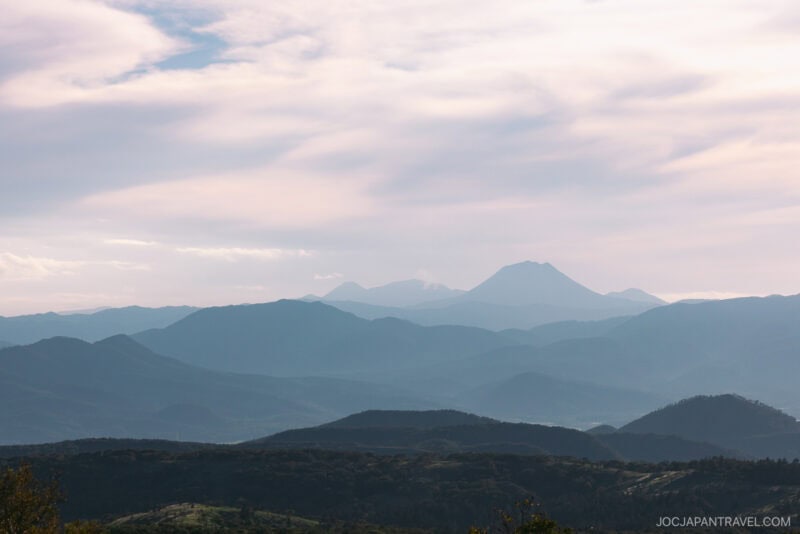
With limited time, I wanted to make the most of my trip. I drove five hours to Lake Kussharo, hoping to catch the Sea of Clouds at sunrise from Tsubetsu Pass Observatory—a dream view that depends entirely on weather.
I arrived around 1 a.m., and it was pouring rain. After a few hours of sleep in my car, I drove up the narrow, deer-filled road. Sadly, thick clouds obscured the view, limiting visibility to just a few meters. My dream will have to wait for next time!
Above picture is a glimpse of what the Sea of Clouds can look like under ideal conditions.
Exploring Lake Kussharo

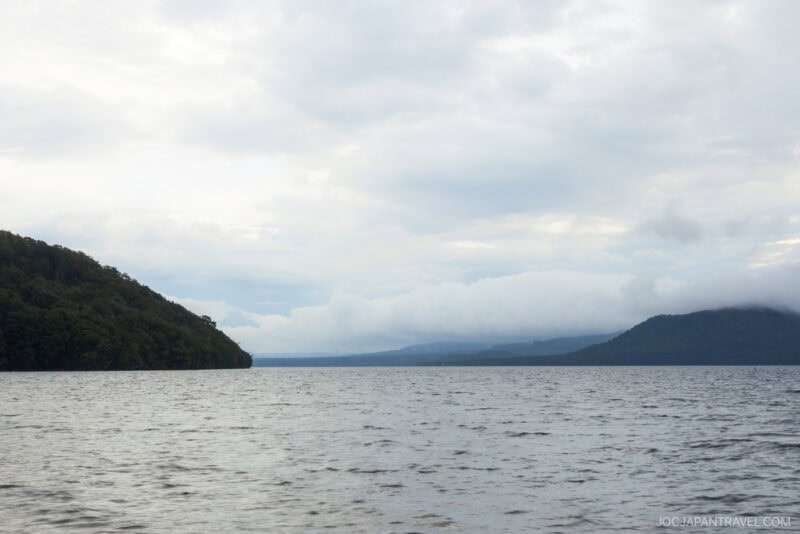
After resting, I explored the lake despite cloudy skies. Even without clear weather, the morning atmosphere was magical: clouds rolling down the mountains, birds awakening, and sunlight piercing through the mist created a tranquil scene.
Lake Kussharo is the largest caldera lake in Japan, with a circumference of 35 miles (57 km). Its name comes from the Ainu word “kut-char” (クㇳチャㇻ), meaning “marsh water outlet.”
Around the lake, several open-air onsens are free and accessible to everyone.
- Wakoto Peninsula: Panoramic views of the lake and mountains, plus nearby Wakoto Hot Spring.
- Ikenoyu Open-Air Bath: Spacious with fantastic lake views.
- Kotan Open-Air Bath: Secluded, partially separated by rocks for mixed-gender use, with small changing huts.
- Sunayu Onsen: Dig a hole in the lakeside sand and natural onsen water bubbles up for a warm foot soak. In summer, the lake is ideal for camping and pedal boating; in winter, swan colonies make it a photographer’s paradise.
No matter the season, soft serve ice cream is a treat you’ll find everywhere, and Mt. Io (Sulfur Mountain) adds a distinct mineral aroma to the air. I had pistachio flavor this time!
Lunch – Miso Venison Ramen

If you’ve ever been to Sapporo, you’re likely familiar with miso ramen. Near Lake Kussharo lies Teshikaga Town, home to the flagship Teshikaga Ramen, which also has a branch in Sapporo’s famous Ramen Alley. I’ve visited the Sapporo shop many times, but on this trip, one dish caught my attention—miso ramen topped with venison.
You might wonder, why venison? Deer have long been part of Hokkaido’s culinary heritage. The indigenous Ainu people traditionally hunted them for food and clothing, and today, hunting continues in a sustainable way to manage the large deer population, which can cause damage to local farms and forests during winter.
The ramen was delicious. It’s rich, savory, and full of umami, quite different from the lighter shoyu or creamy tonkotsu styles. I expected the venison to be tough, but it was tender and flavorful with just a hint of gaminess. It might not be a must-eat, but if you’re nearby and craving ramen, it’s definitely worth a bowl.
Hotel & Spa Resort La Vista Akangawa Kushiro
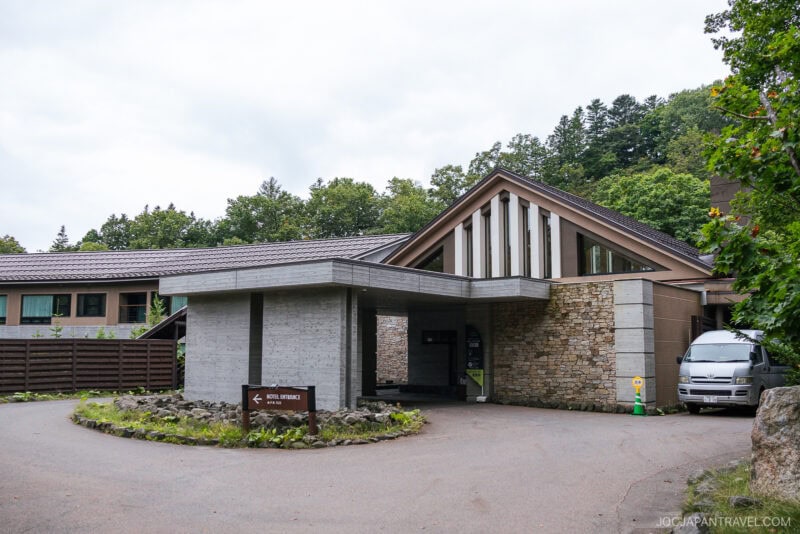
After a day of traveling, I checked into Hotel & Spa Resort La Vista Akangawa Kushiro, about ten minutes from Lake Akan. Nestled beside the Akan River, surrounded by peaceful forest, it’s the kind of retreat that instantly soothes the soul.
Each room includes a private onsen bath with views of the river and trees. There’s also a spacious public onsen with indoor and outdoor baths, a sauna, and cold-water bath, along with three private baths available for free. All are fed by nearby natural springs.
The room itself was spacious, with one of the largest beds I’ve ever seen! From the window, I could see the Akan River flowing by, and sometimes wild deer grazing right outside.
I can’t say enough good things about La Vista, from the relaxing atmosphere and variety of onsens to the room and delicious food, which brings me to dinner.
Dinner at La Vista Akangawa Kushiro
The dining room sits on the ground floor, overlooking the river. As you dine, you can watch deer wander through the open fields. What a beautiful, almost dreamlike sight!
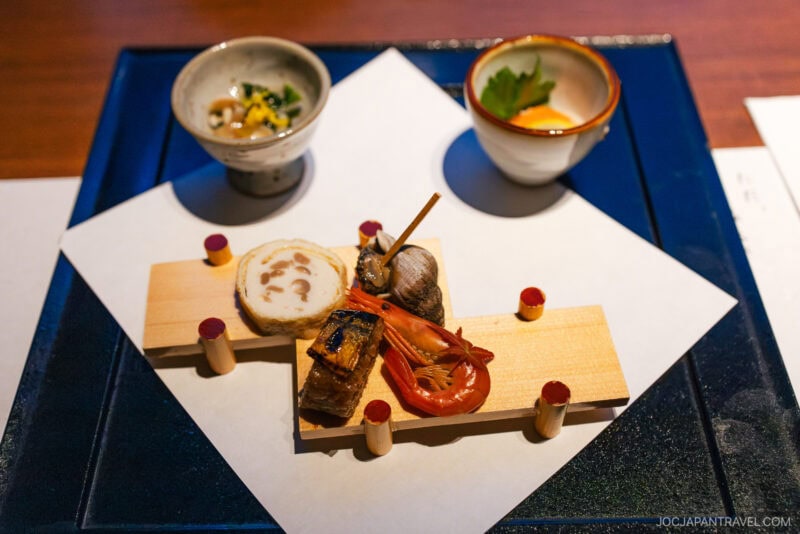
Dinner featured a multicourse menu centered around local, seasonal ingredients. Each dish was beautifully prepared, highlighting the flavors of eastern Hokkaido. There was a lot of food (in the best way!), so make sure to come hungry.
Kamuy Lumina – Night Walk at Lake Akan

After dinner, I joined a special night event called Kamuy Lumina, inspired by Ainu legends and the natural beauty of Lake Akan’s forests. Based on The Tale of the Owl and the Jay Bird, this immersive 1.2 km night walk leads you through the forest with lights, soundscapes, projections, and narration that bring the story to life.
At the entrance, you receive a “Rhythm Staff” that interacts with the lights and sounds as you move through eight distinct story points.
Tickets cost 3,500 yen (~$23 USD) on the day or 3,000 yen (~$20 USD) if booked in advance. You can reserve online or check with your hotel, which may offer discounted tickets. The story is told in Japanese, but an English translation is available through a companion mobile app. (Information here)
After the enchanting walk through the forest and a long soak in the hotel onsen before bed, it was the perfect way to end the day.
Now, let me take you to Day 2 of my eastern Hokkaido trip, where we explored Lake Akan, Lake Mashu, and Ainu Kotan (village).
More to Explore Nearby
Akan-Mashu National Park is a massive area in Eastern Hokkaido, rich in volcanic activity and Ainu culture. Its proximity to other major national parks and coastal cities allows for further exploration of Hokkaido’s pristine, wild side.
- Kushiro Shitsugen National Park – Discover Japan’s largest wetland ecosystem, a vital habitat for endangered species, including the iconic Japanese crane (tancho), which can be seen year-round.
- Shiretoko Peninsula – Explore this UNESCO World Heritage Site, renowned for its pristine wilderness, abundant brown bears, and dramatic coastal cliffs and deep forests.
- Ainu Kotan (Lake Akan) – Immerse yourself in the rich culture and traditions of the Ainu indigenous people at this preserved village located right on the shores of Lake Akan.
- Kawayu Onsen and Mount Io – Visit this hot spring town near Lake Mashu and see the steaming, sulfuric fumaroles of Mount Io (Atosanupuri), an active geothermal mountain.