This post may contain affiliate links. Please read our disclosure policy.
Ride a Shinkansen simulator, explore full-size trains, and experience Japan’s railway innovation at Nagoya’s interactive SCMaglev and Railway Park.
Where Past Meets the Future of Japanese Rail
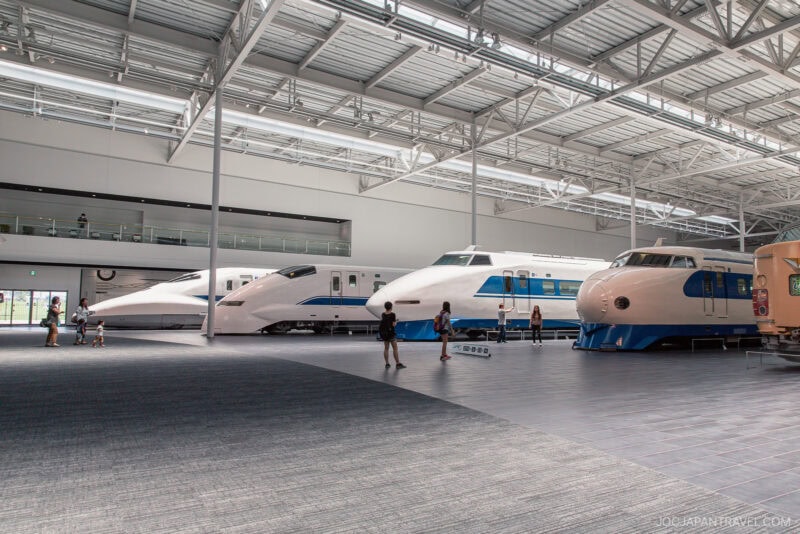
SCMaglev and Railway Park is one of the most impressive train museums we’ve explored. Operated by JR Central in Nagoya, it traces Japan’s railway evolution from early steam locomotives to the cutting-edge SCMaglev. The museum is family-friendly, hands-on, and educational, whether you’re a rail enthusiast or just curious about how Japan became a global leader in train technology.
See the World’s Fastest Train Up Close
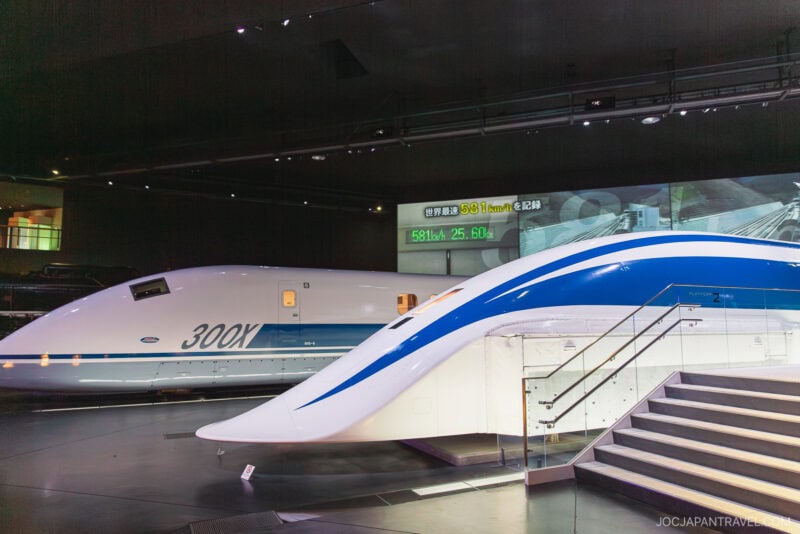
As we entered the exhibition hall, we were immediately greeted by three record-breaking trains. A steam locomotive, an early Series 0 Shinkansen, and the futuristic SCMaglev stood side by side under soaring ceilings. Each one told a piece of Japan’s transportation story—from old-world charm to cutting-edge speed.
The SCMaglev on display holds the Guinness World Record for fastest train at 603 km/h (375 mph)!
Drive a Shinkansen (Kind Of!)
One of the most exciting experiences at the museum is the chance to drive a Shinkansen. The N700 Simulator is a big draw, and entry is determined by lottery, so it’s best to check the schedule as soon as you arrive. After a short run, you’ll receive a driving score and pick up fun details like how actual Shinkansen trains automatically brake when approaching stations.
Walk Through Real Train Cars
Inside the main hangar, over 30 full-size train cars are beautifully preserved. We stepped inside everything from retro commuter trains to elegant dining cars. One highlight was the classic Series 0 Shinkansen with its distinctive bullet-shaped nose.
Nami grew up riding this model to visit her grandparents in Osaka, and stepping inside brought back vivid memories of those trips. It was a rare moment where history felt both personal and real.
Relive the Golden Age of Rail Travel
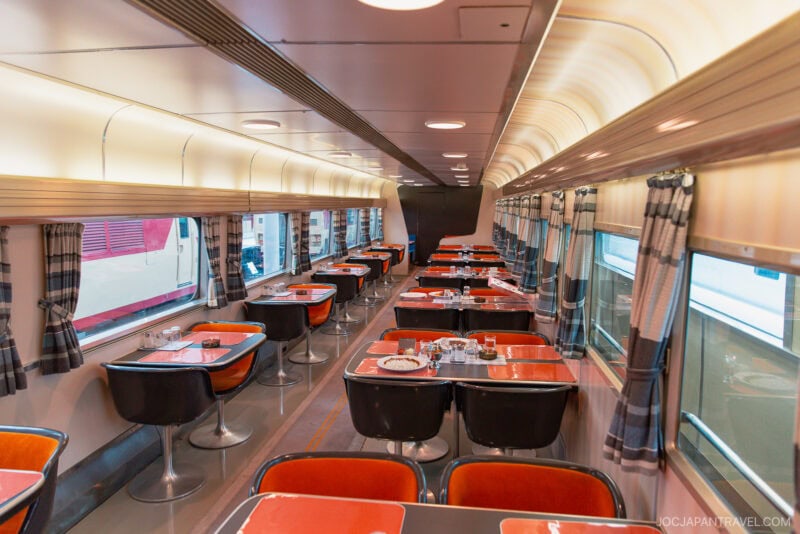
We also wandered through a restored first-class dining car, complete with white linens and polished silverware. It offered a glimpse into an era when train travel was both refined and relaxing, worlds apart from our usual ekiben routine.
Japan in Miniature: The Model Railway Diorama
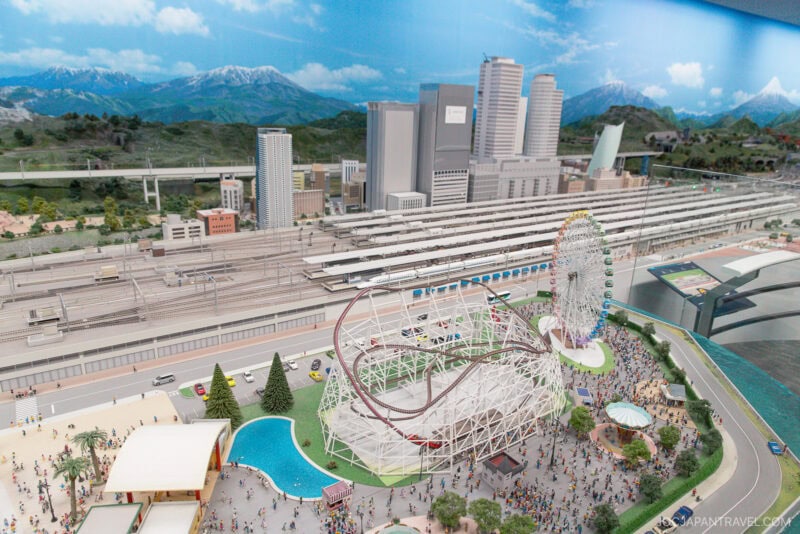
Don’t miss the massive model railway diorama. This exhibit recreates Tokyo, Kyoto, Nagoya, and other cities in intricate detail. Trains zip around while lights dim and brighten to simulate day and night. The tiny platforms, stations, and sounds make it feel like you’re watching a living city shrink-wrapped into a display case. Our whole family was mesmerized.
Ekiben and On-Site Dining
After exploring, we stopped at the café and grabbed some Ekiben (駅弁)—regional bento boxes sold at train stations. The shop had options from across Japan, and the meal felt like part of the journey. Whether you prefer grilled fish, karaage chicken, or vegetarian selections, there’s something tasty to enjoy here.
Learn How Japan Builds Its Tracks
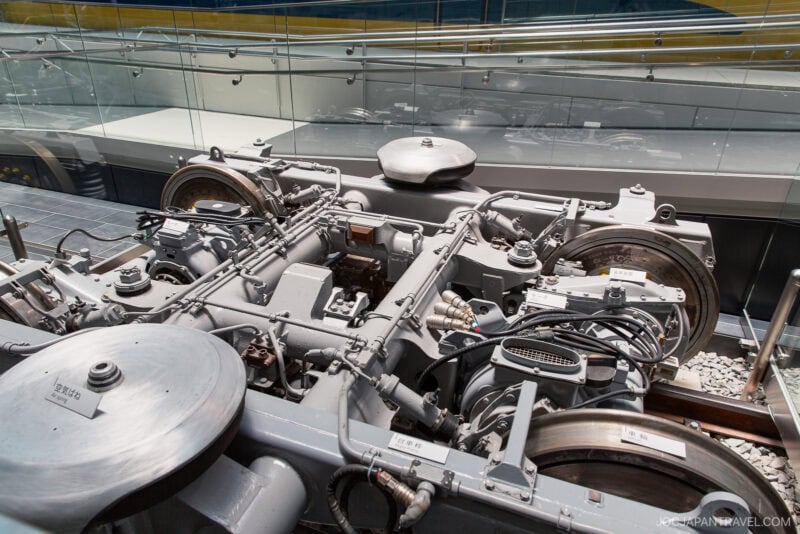
The museum also features hands-on displays about the technology behind Japan’s railway system. One exhibit shows how machines lay track and ballast in a single pass, helping trains run with incredible precision. It’s a fascinating peek into the behind-the-scenes work that keeps the system efficient and safe.
How to Get to SCMaglev and Railway Park
Train
- From Nagoya Station, locate the Aonami Line platform. Take the Aonami Line to its terminal station, Kinjofuto Station (金城ふ頭駅). The ride takes approximately 25 minutes. Upon arriving at Kinjofuto Station, the SCMaglev and Railway Park is just a 2-minute walk from the station exit. Signs will clearly direct you.
- Total travel time: 30 minutes.
Taxi
- A taxi from Nagoya Station takes about 20 minutes and costs around ¥3,500–¥4,000.
Pro Tip: Arrive early if you want to try the simulators. They’re limited and often booked out by mid-morning.
Is SCMaglev and Railway Park Worth Visiting?
We loved every minute we spent at the museum, especially our son who is obsessed with trains. The interactive displays, full-size trains, and rich history make it one of the best family-friendly attractions in Nagoya.
More to Explore Nearby
After exploring Japan’s bullet train history and climbing into classic locomotives at SCMaglev and Railway Park, check out these nearby attractions in Nagoya:
- Legoland Japan Resort – Just a short walk away, this colorful theme park is perfect for families with young kids.
- Noritake Garden – Explore the legacy of fine porcelain with workshops, a museum, and scenic grounds.
- Nagoya Castle – Step into history at this reconstructed castle with sprawling gardens and the elegant Hommaru Palace.
- Toyota Commemorative Museum of Industry and Technology – Learn how Toyota evolved from weaving looms to robots and cars in this hands-on museum.