

This post may contain affiliate links. Please read our disclosure policy.
From snowy landscapes to hot spring baths, this Furano and Biei Winter Travel Guide has everything you need to plan your perfect winter getaway.
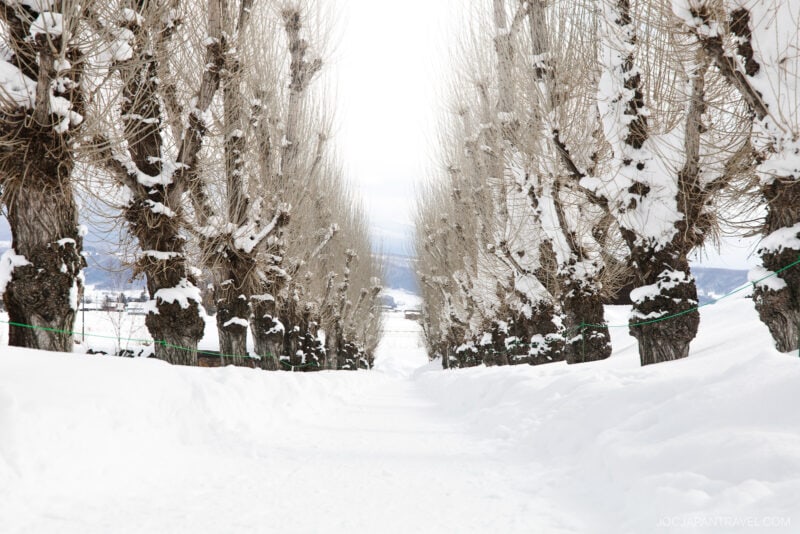
Furano, famous for its lavender fields and seasonal flowers, transforms into a winter wonderland offering a wide range of snow activities and stunning scenery. From skiing and snowboarding to dog sledding and frozen waterfalls, there’s something for everyone to enjoy Hokkaido’s winter.
I’ll be revisiting many spots from the summer Furano Travel Guide to show you what the region is like during peak winter season.
How to Get to Furano
Furano sits in central Hokkaido and is accessible from Sapporo by train or bus. By train, take the Lilac-Kamui Limited Express from Sapporo Station to Takikawa Station, then transfer to the Nemuro Line to Furano Station. The journey takes about 2 hours and 20 minutes and costs 4,540 yen ($30 USD) one way in 2024.
By bus, the Hokkaido Chuo Bus from the Chuo Bus Terminal takes roughly 3 hours and costs 2,700 yen ($18 USD).
Once in Furano, some destinations are tricky to reach, so renting a car may be worthwhile. Winter roads around Furano and Biei can be narrow, windy, and dangerous, with unpredictable weather. Driving from Sapporo takes about two hours, with 1,300 yen ($9 USD) in tolls, then another 40 minutes to Biei from Furano. Take care on slippery roads.
Winter Activities
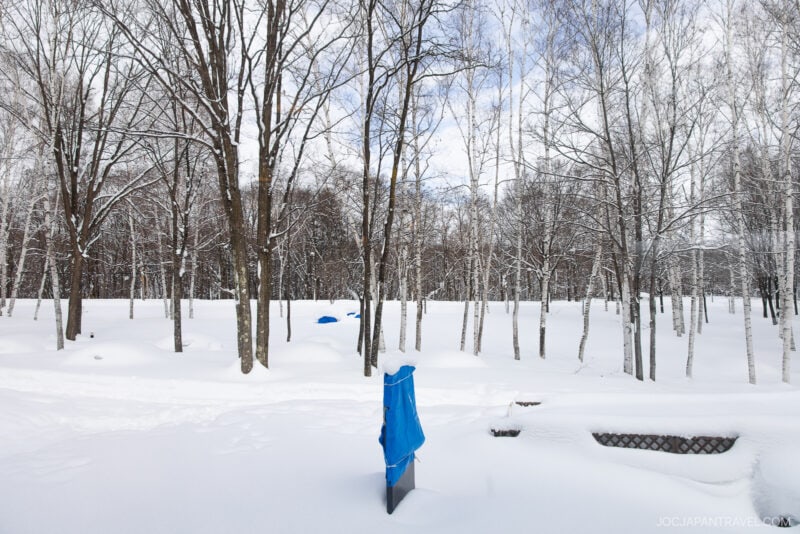
Furano Ski Resort is one of central Hokkaido’s most popular ski areas, alongside Tomamu. The resort has two zones: Kitanomine (open mid-December to late March) and Furano (late November to early May), with 28 trails in total.
Furano receives some of Hokkaido’s lightest, driest snow from Siberian storms, averaging 7 meters annually, with January and February seeing the most snowfall.
The trails cater to all skill levels—20% advanced, 40% intermediate, 40% beginner. Night skiing is available until 8 pm, and the Furano Ropeway takes you to the summit, offering panoramic views of the Daisetsu Mountain Range. At the base, two ski-in, ski-out Prince Hotels make this a convenient winter getaway.
Fun in Furano
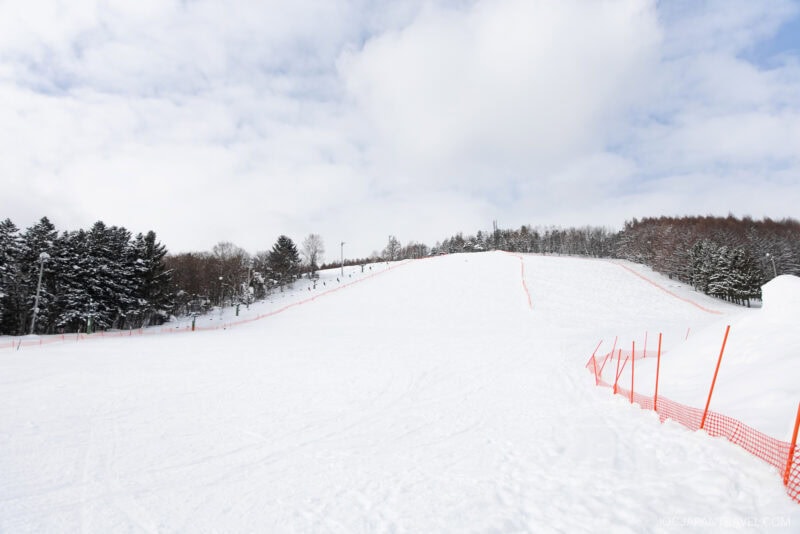
What makes Furano special is that you can enjoy powder snow and scenic, spacious slopes without the crowds of more famous resorts like Niseko. English support is available for ski lessons, hotels, and other services. For smaller slopes, consider Nakafurano Hokusei Ski Area.
Beyond skiing, Furano offers snowshoeing, snow rafting, and even hot air balloon rides. I wasn’t lucky with the weather on my visit, but there’s plenty to explore. You can see a full list of activities here.
Furano Cheese Factory
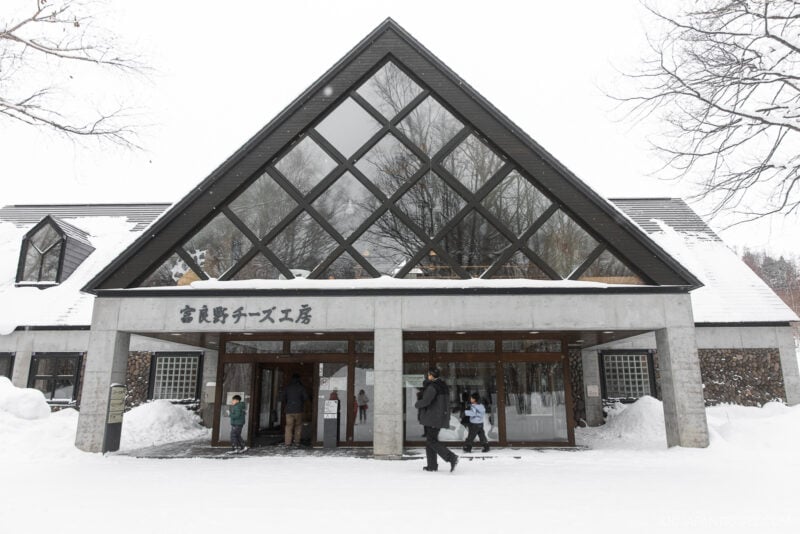
Furano is famous for its agriculture and dairy, and the Furano Cheese Factory is a must-visit. You can watch cheese production up close and sample unique flavors, including squid ink cheese. There are also hands-on experiences for making ice cream and butter.
Downstairs, a small pizza restaurant serves dishes made with local vegetables and house-made cheese.
Farm Tomita
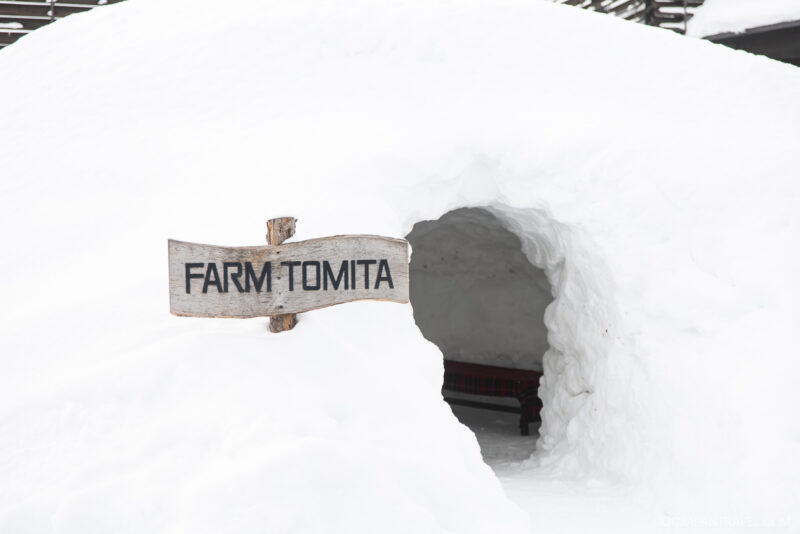
In summer, Farm Tomita is a sea of purple lavender that draws visitors from around the world. In winter, the fields are blanketed in snow, and most shops are closed. While it’s a quieter scene, the snowy landscape is still beautiful for a peaceful walk.
Aoi-Ike (Blue Pond)

Just outside Shirogane Onsen, Aoi-Ike is known for its bright blue water, created by natural minerals. I’ve visited in summer, and the color is stunning. In winter, however, the pond is frozen and snow-covered, hiding its blue hue. If you can, visit in spring, summer, or autumn to see its famous color.
Shirahige Waterfall
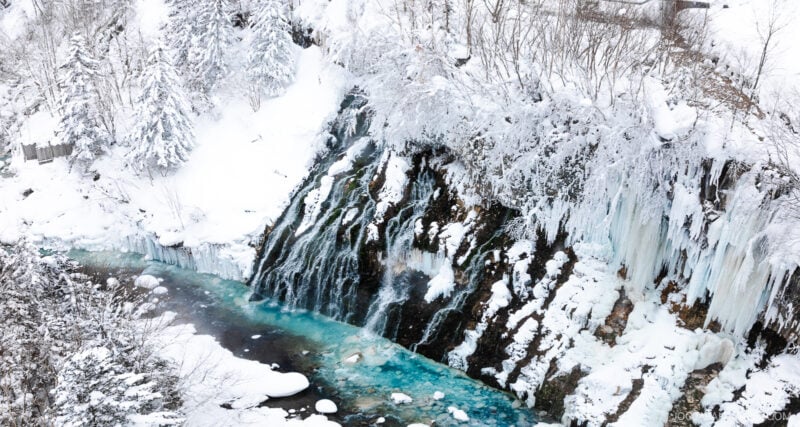
A five-minute drive from Aoi-Ike, Shirahige Waterfall was the highlight of my winter Furano trip. Streams flow from the cliffs into the Biei River below, and in winter, the waterfall freezes into breathtaking ice formations.
Its name means “white beard,” which perfectly suits the frozen scene. The contrast between the ice and the cobalt blue river makes it a must-see.
Shikisai No Oka
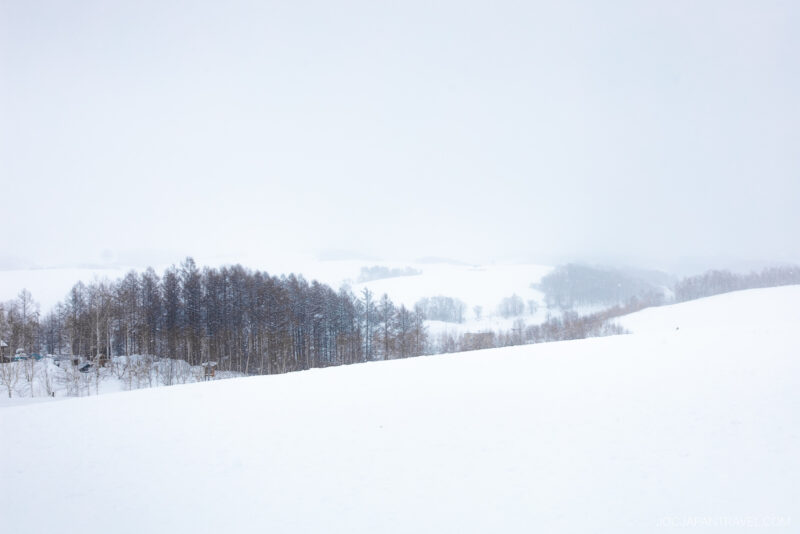
Summer brings colorful flowers to Shikisai No Oka, but in winter, snow transforms the rolling hills into a playground. Kids can rent sleds, while adults can try snowmobiles or banana boats.
This is also where my driving mishap occurred. Poor visibility and trust in the car navigation led me down a narrow, snowy road where my car eventually got stuck. After about half an hour digging out, staff from Shikisai No Oka helped pull me free.
Many roads around Furano are like this—deserted and risky. If driving in winter, be cautious and prepared; JAF or your car rental can help, but response times may be slow in severe conditions.
Lone Christmas Tree
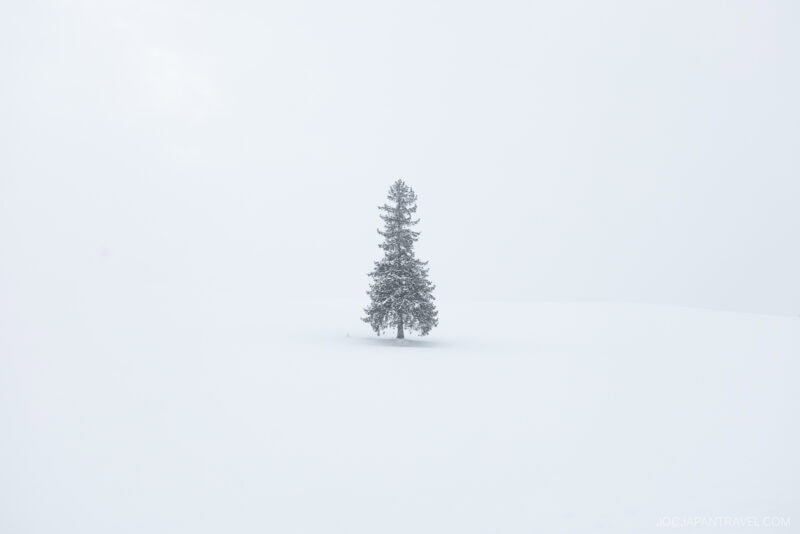
As daylight faded, I visited the Lone Christmas Tree, an 8-meter spruce with a tip shaped like a star. Surrounded by snow, it felt like stepping into a painting. The area is private, so you can only admire the tree from the road.
Ningle Terrace
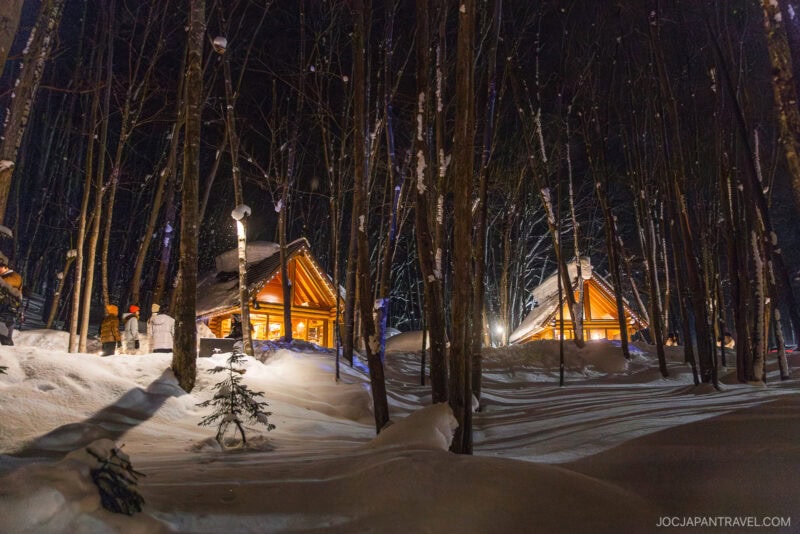
Evenings in Furano are quiet unless you’re skiing or visiting Ningle Terrace. Near the New Furano Prince Hotel, this charming shopping area features 15 log cabins connected by wooden walkways lined with fairy lights. The name comes from So Kuramoto’s novel Ningle, about a tiny forest creature in Hokkaido.
Next to Ningle Terrace, a small illumination display with a paid entrance adds to the winter magic. After a long day in temperatures near 14°F (-10°C), it was time to warm up with something cozy to eat.
Curry at Yuiga Dixon

After checking around Furano Station, I found that many restaurants were closed. My only option was a curry shop, Yuiga Dixon.
It’s a popular spot, and the staff mentioned there are often queues. I waited about 15 minutes for a seat and decided on the beef tongue doria. It arrived piping hot, with tender beef tongue, spicy curry, and rich cheese. I was grateful and happy for a warm meal.
Furano in winter is truly a wonderland, with stunning scenery and plenty of activities. Whether the sun is shining or snow is falling, there’s always something to enjoy. Just travel carefully, and savor the magic of Hokkaido’s winter!
More to Explore Nearby
Furano and Biei are famous for their stunning patchwork fields and rolling hills, a picturesque landscape that serves as the perfect gateway to central Hokkaido’s mountains, ski resorts, and important cultural cities.
- Asahikawa Ramen Village – Journey north to the second-largest city in Hokkaido to sample the city’s famous soy-sauce-based ramen at eight different specialized shops housed in one convenient location.
- Daisetsuzan National Park – Discover the largest national park in Japan, known as the “Playground of the Gods,” offering spectacular hiking, alpine scenery, and early autumn color viewing.
- Niseko – Travel southwest to the world-renowned resort town famous for its deep, light powder snow in winter and excellent hiking, rafting, and golfing opportunities in the summer.
- Sapporo City – Head to the major regional hub of Hokkaido to explore its vibrant downtown, famous beer gardens, and seasonal events like the renowned Snow Festival.
hi – I really love your Furano itinerary. Wondering if you do private tours or recommend any drivers as I know if can be dangerous driving in Hokkaido. Could you pleaes let me know if you have any recommendations where we might be able to higher a driver this December as we are planning to stay in Furano. Thank you!