This post may contain affiliate links. Please read our disclosure policy.
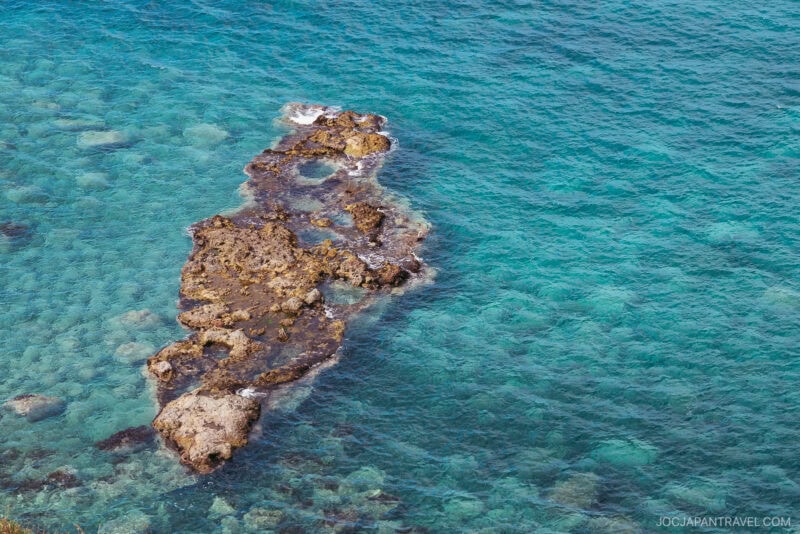
Where cliffs meet the sea, Shakotan awaits. Hike Cape Kamui, follow the legendary Charenka’s Path, and marvel at the mesmerizing “Shakotan Blue”.
If you’re heading from Sapporo, there’s a single bus at 9:35 a.m. from Sapporo Station to Cape Kamui. The ride takes about 2 hours and 20 minutes and costs 2,420 yen. You can find more details here in Japanese, or reserve the Scenic Cape Shakotan Tour through Chuo Bus.
For those who enjoy hiking, Mt. Shakotan is a must. Standing at around 1,255 meters, the summit rewards you with incredible views of the Sea of Japan, Mt. Yotei in Niseko, and the Rumoi Ranges.
The Shakotan Peninsula is part of the Niseko-Shakotan-Otaru Kaigan Quasi-National Park, Japan’s only ocean area included in a national park. If you love water activities, you can snorkel or sea kayak in the crystal-clear waters, which is a lot of fun on a sunny day.
A Brief History of Shakotan
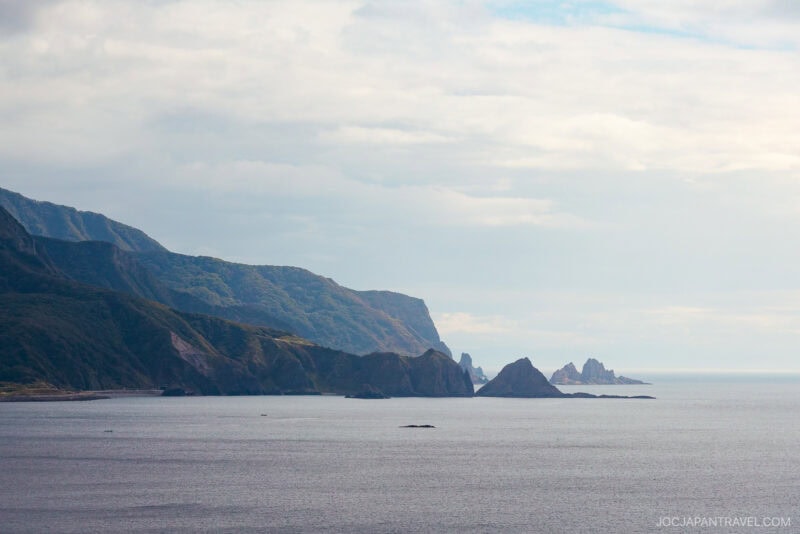
Shakotan was first settled during the Edo Period (1603–1868) when former samurai left their warrior life to farm and develop the booming herring industry. The town thrived for a while, but overfishing caused a population drop by 1917. Modern Shakotan town was formed in 1956 when Bikuni, Irika, and Yobetsu merged.
Ebisu Iwa & Daikoku Iwa
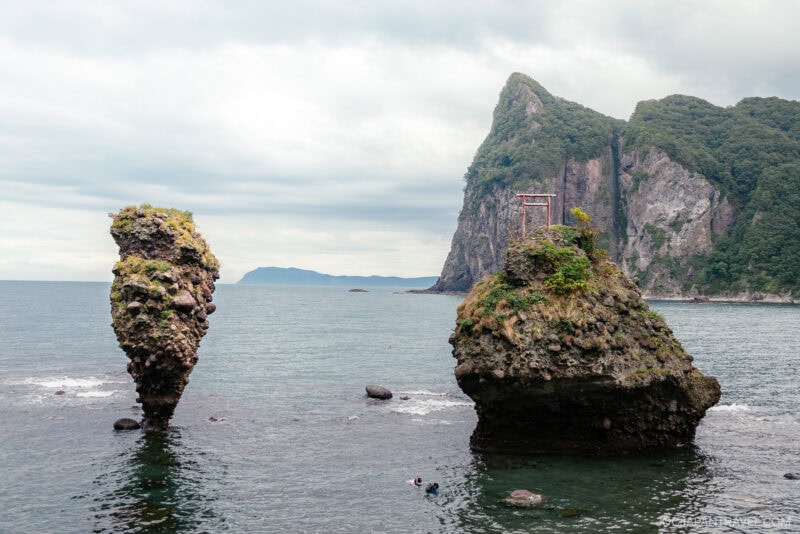
These two rocks may look simple at first, but they have fascinating stories. Ebisu Iwa represents the god of fishermen, holding a fishing rod and red sea bass, while Daikoku Iwa, the god of wealth, carries a golden mallet. You’ll even spot a torii gate on top of Daikoku Iwa. I loved walking down to the beach for a closer view, though there were people snorkeling and on SUP boards that day.
Driving along the coast, you’ll pass Bikuni Fishing Port, Cape Ogon, and Shimamui Coast. Shimamui Coast is stunning—crystal-clear waters and dramatic cliffs—but I had to skip it this time to make it to Cape Kamui.
Cape Kamui
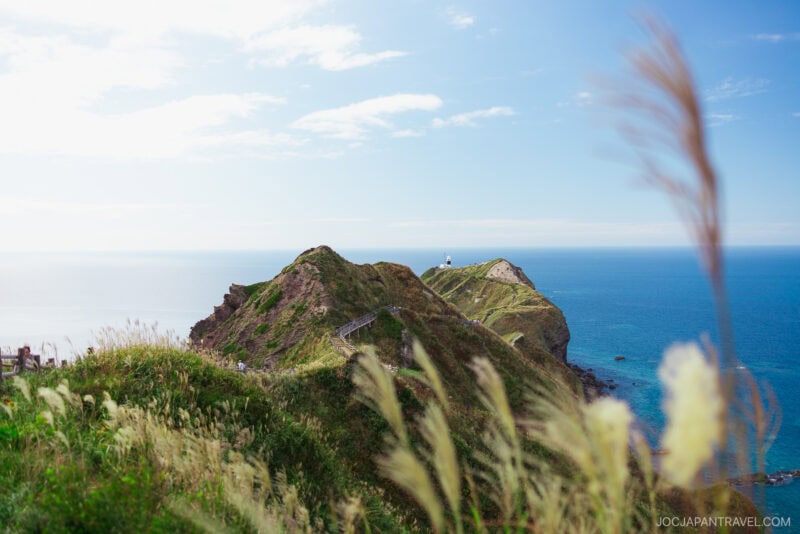
On to the main attraction, Cape Kamui (神威岬), also called Kamui Misaki, is unforgettable. The cliffs stretch into the Sea of Japan, and Charenka’s Path, a 770-meter trail, leads to the tip of the cape. It takes about 20 minutes one way, but the slopes and steps make it a good little workout.
Bring water and a towel—you’ll want to pause and take it all in.
Charenka’s Path Folklore
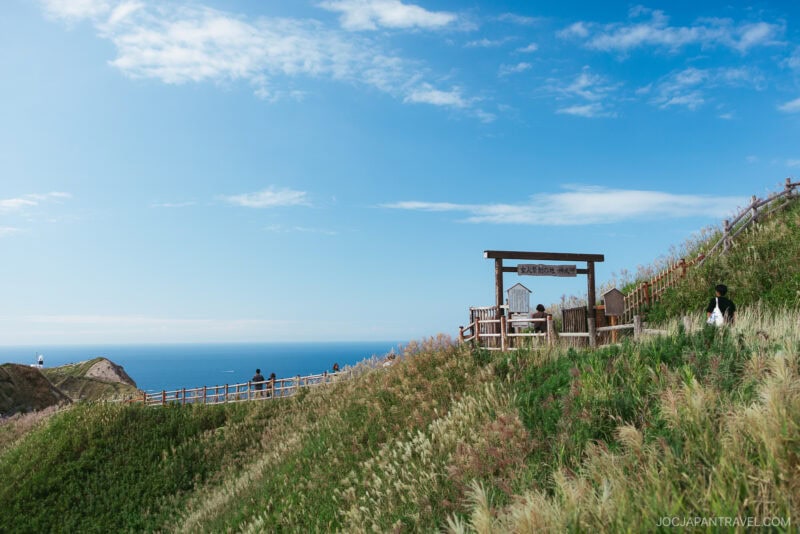
This wooden torii-esque gate marks the start of Charenka’s path. Before you enter, you might see a sign saying no women allowed. This is based on the folklore of a lost lover.
A man named Minamoto Yoshitsune fled from Oshu to Hokkaido. His lover Charenka, the Ainu chief’s daughter, chased him in desperation. Legend says she leapt into the sea, and Kamui Rock at the cape’s tip symbolizes her sorrow. For safety, women were historically banned from the path, though today anyone can hike and enjoy the views.
At the tip, a lighthouse stands beside Kamui Rock, and the waves crash below in the most mesmerizing shades of Shakotan Blue. Even on a cloudy day, the colors are magical.
Cape Kamui is open year-round, but Charenka’s Path is accessible from spring to fall. For the most vibrant views, visit in July when the summer sun, lush greenery, and Shakotan Blue are at their peak. It’s one of the most picturesque places I’ve ever been!
Otaru Soft Cream
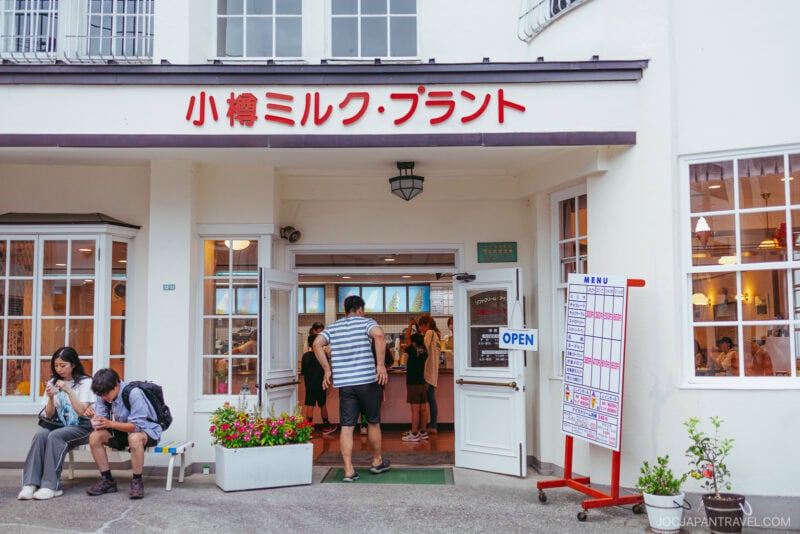
After a full day of eating and exploring, there was only one way to end it—soft cream.
We treated ourselves at the popular Otaru Milk Plant. The building, originally the office for the milk plant behind it back in 1936, now serves rich, creamy soft serve that keeps customers lining up all day.
The menu offers various flavors, but our favorite is the Hokkaido milk flavor. There’s nothing fancy about it—just high-quality milk, perfectly sweet, and irresistibly creamy. Every bite reminds me of a true taste of Hokkaido and why I never get tired of soft cream.
More to Explore Nearby
The Shakotan Peninsula is a destination for dramatic seascapes and the pristine “Shakotan Blue” water. Its remote location offers access to beautiful coastal drives, therapeutic onsen resorts, and the major cultural centers of Western Hokkaido.
- Cape Kamui – Journey along the coast of the Shakotan Peninsula to this dramatic viewpoint, known for its sheer cliffs and the incredible, deep blue “Shakotan Blue” sea.
- Yoichi Nikka Whisky Distillery – Visit the historic site founded by Masataka Taketsuru, the father of Japanese whisky, for tours and tastings in a traditional stone-walled setting.
- Otaru Canal Area – Visit this beautiful port city, known for its preserved historical buildings, iconic gas lamps, and delicious seafood restaurants lining the picturesque canal.
- Lake Toya – Head south to this major caldera lake located in the Shikotsu-Toya National Park, offering tranquil views, boat cruises, and evening fireworks displays in the summer.