
This post may contain affiliate links. Please read our disclosure policy.
Explore the beauty of Lake Akan and Lake Mashu and learn about rich cultural heritage and history of the Ainu people.
Welcome to Part Two of my two-day guide to Eastern Hokkaido! On the first day at Akan Mashu National Park, I made the most of rainy weather by exploring Lake Kussharo, soaking in soothing onsens, and sampling hearty local Akan cuisine at my hotel.
Day two greeted me with perfect weather. I explored Lake Akan and Lake Mashu, delved into the history and traditions of the Ainu—Hokkaido’s indigenous people—and even got up close with Lake Akan’s famous marimo algae. Another full day of adventure and scenic drives awaited!
Lake Akan Cruise
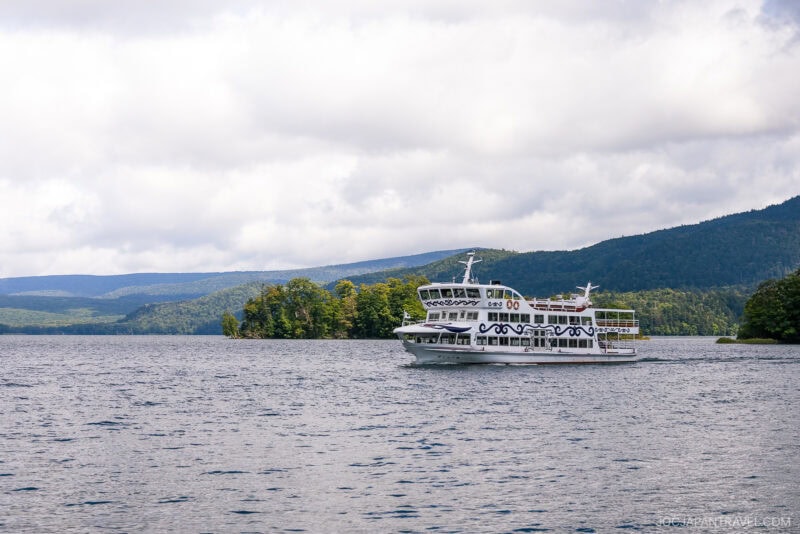
After checking out of the hotel, I headed to Lake Akan, nestled within the Akan Caldera, formed thousands of years ago after volcanic eruptions.
The Lake Akan sightseeing cruise is a wonderful way to experience the caldera. The 85-minute tour, priced at 2,000 yen (13 USD) for adults and 1,040 yen (7 USD) for children in 2023, circles the lake, passes the scenic Takiguchi area, and stops at Churui Island, where you can admire the marimo up close.
On clear days, you can see Mount Meakan and Mount Oakan, both active volcanoes that last erupted in 2008.
Marimo Algea
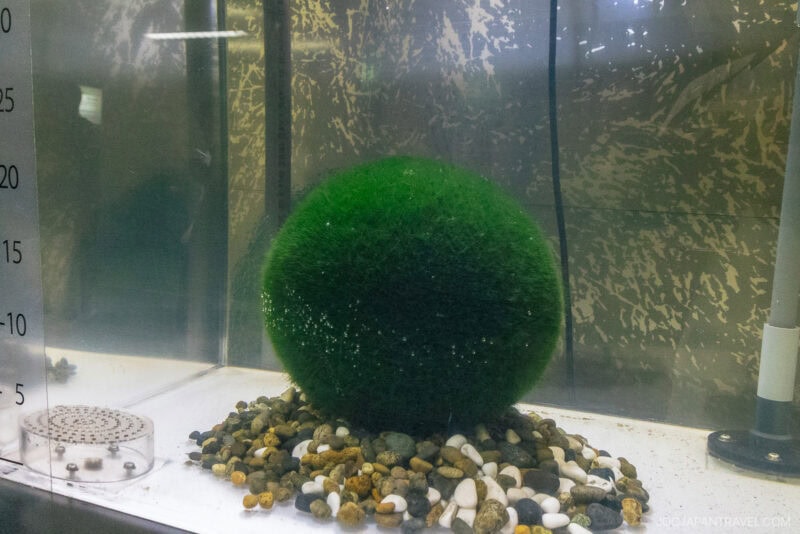
The bottom of Lake Akan is inhabited by marimo, a type of rare spherical algae that can grow up to 30 centimeters in diameter.
Historically, overharvesting threatened their survival, but protection measures began in the 1920s. Today, the Ainu celebrate marimo during a three-day festival each October, returning the algae to the lake with reverence.
Toward the end of the cruise, you get a 15-minute stop at the Marimo Exhibition Center to learn about these fascinating algae and the ongoing conservation efforts.
Lake Akan Ainu Kotan

Near the cruise, you’ll find Ainu Kotan, a small village home to roughly 120 Ainu people from 36 families. Visitors can explore shops selling handmade crafts, learn about Ainu traditions, and enjoy traditional cuisine.
The moment we arrived, I was immediately transported into the world of the Ainu by the music and unique architecture.
Traditional Ainu Food
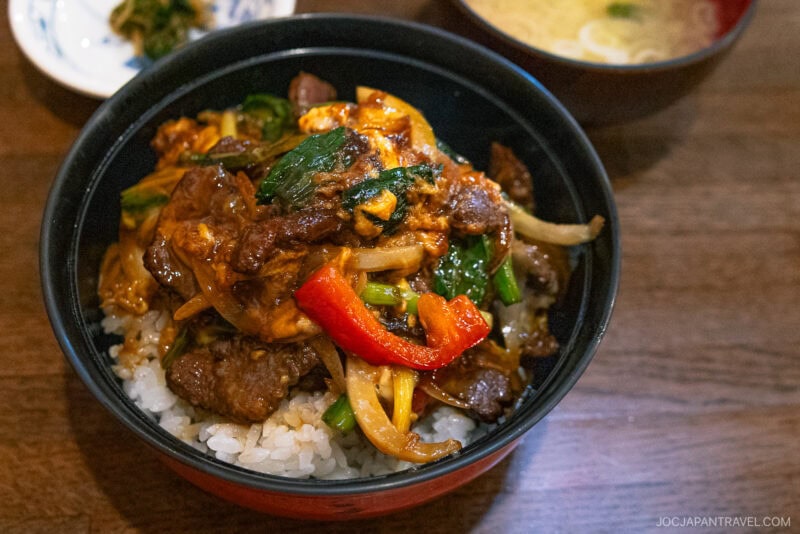
For lunch, I visited Marukibune, where options range from soup curry to ramen. I wanted to try traditional Ainu food, so I decided on Yasei Don (venison rice bowl).
Venison has long been part of Hokkaido’s cuisine and was a crucial food source for the Ainu. The bowl included tender venison, fresh vegetables, and a soft egg. The best way to describe the donburi? A rich, comforting meal reminiscent of oyakodon and gyudon.
Traditional Ainu Craft

Throughout Ainu Kotan, artisans sell intricately carved wooden figures of bears, birds, and humans. These original artworks are highly sought after worldwide.
To gain insights into Ainu culture, you can watch a 30-minute performance at Ainu Theater Ikor, with a lineup of traditional dance, music, and folklore stories. Tickets cost 1,500 yen for adults and 700 yen (5 USD) for children.
Alternatively, you can attend the Lost Kamuy performance, which tells the story of the Ainu people and the Hokkaido wolf through dance and digital art. Tickets are priced at 2,200 yen (14 USD) for adults and 700 yen (5 USD) for children.
Ainu Living Memorial Hall Poncise

I visited the Ainu Living Memorial Hall Poncise to get a closer look at Ainu culture. This small thatched-roof house showcases artifacts, traditional clothing, and everyday tools, offering a vivid glimpse into how the indigenous people of Hokkaido once lived.
Bihoro Pass
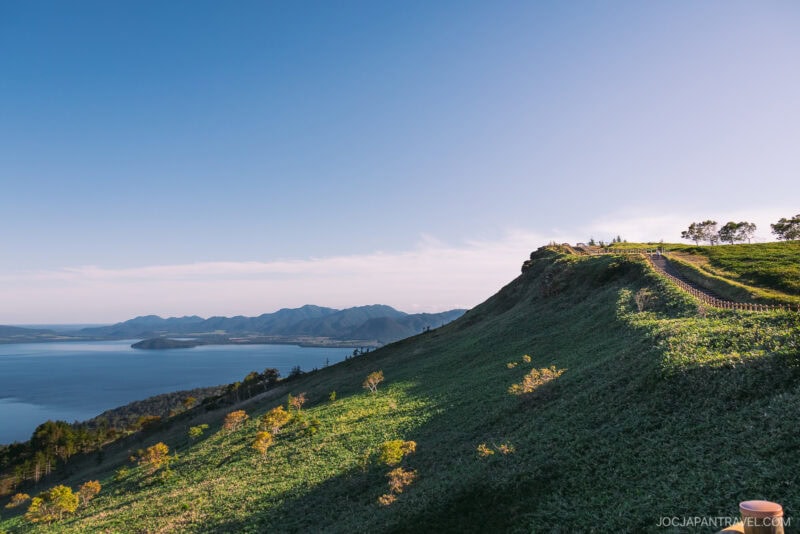
As the clouds cleared, I drove up to Bihoro Pass, near Lake Kussharo. The winding road took just over an hour, gradually ascending the mountains, alive with bikers and travelers eager to catch the stunning views.
From the Bihoro Pass Observatory, you’re treated to a panoramic vista of Kussharo Caldera, the largest caldera lake in Japan. I recommend hiking to the top of the observatory for the best perspective of the lake, Nakajima Island, the Wakoto Peninsula, and the surrounding lush landscape.
The observatory also has a rest house with restaurants and shops. During my visit, I sampled the local ageimo (deep-fried potato) and a unique ice cream flavored with Kuma bamboo grass!
For early risers visiting between June and October, conditions may allow a magical sea of clouds to appear over the caldera in the morning.
Lake Mashu
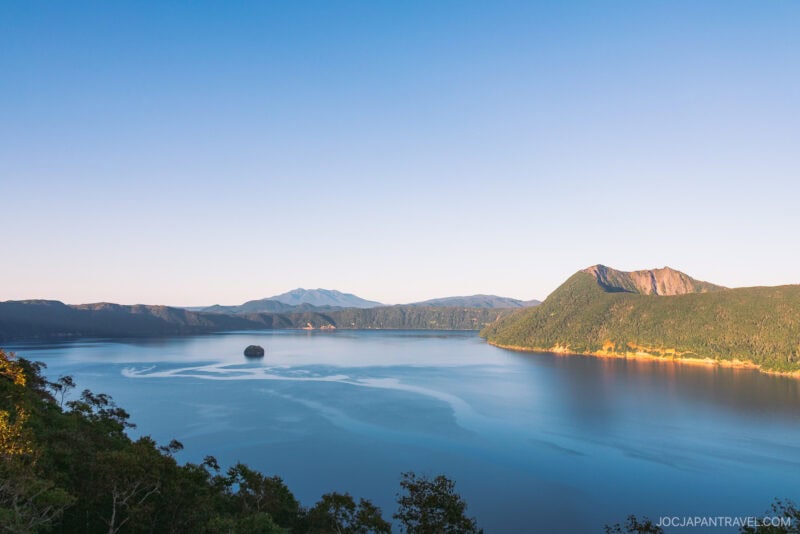
The final stop of my two-day journey was Lake Mashu, about a 40-minute drive from Bihoro Pass. Several observatories surround the lake, and I started at Lake Mashu Observatory No.1. Here, you can browse souvenirs or grab a snack and coffee before heading up the stairs to the observation deck for panoramic lake views.
To the right, Mount Kamui rises as a dormant volcano. It hasn’t erupted in over a thousand years, so no need for concern.
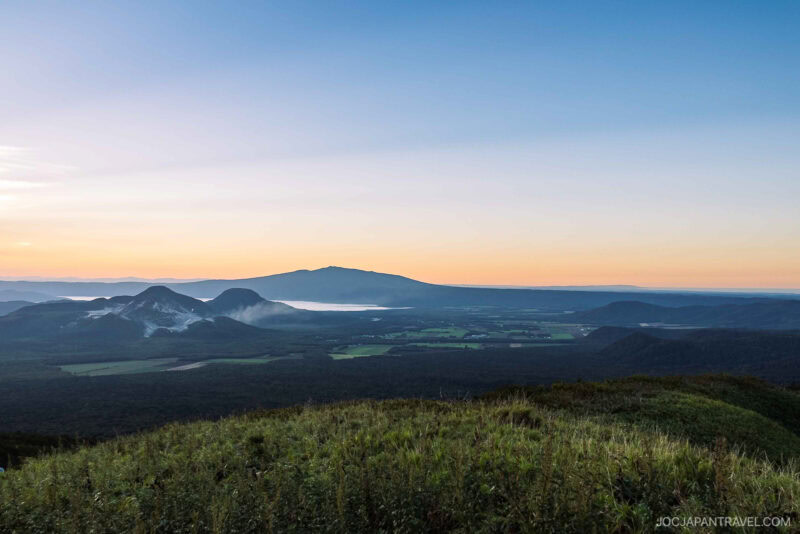
Later, I drove to Observatory No.3, just in time for sunset. The view was breathtaking! The entire Akan Mashu National Park stretched out before me, with Iozan (Mt. Ito) venting steam from its fumaroles. The sides of the volcano were streaked white from the sulfur deposits, creating a dramatic, otherworldly scene.
Ending the trip here reminded me why I love Hokkaido so much. The eastern region is often overlooked, yet it’s packed with striking landscapes and cultural experiences. I hope this inspires you to include it on your Japan itinerary!
More to Explore Nearby
As two highlights of the Akan-Mashu National Park, these magnificent caldera lakes anchor a region known for its dramatic volcanic landscapes, rich indigenous culture, and unique wildlife, offering unparalleled natural exploration in Eastern Hokkaido.
- Ainu Kotan (Lake Akan) – Immerse yourself in the rich culture and traditions of the Ainu indigenous people at this preserved village located right on the shores of Lake Akan.
- Shiretoko Peninsula – Explore this UNESCO World Heritage Site, renowned for its pristine wilderness, abundant wildlife, and dramatic coastal cliffs and deep forests.
- Kawayu Onsen and Mount Io – Visit this hot spring town near Lake Mashu and see the steaming, sulfuric fumaroles of Mount Io, an active geothermal mountain.
- Kushiro Shitsugen National Park – Discover Japan’s largest wetland ecosystem, a vital habitat for endangered species, including the iconic Japanese crane, which can be seen year-round.