This post may contain affiliate links. Please read our disclosure policy.
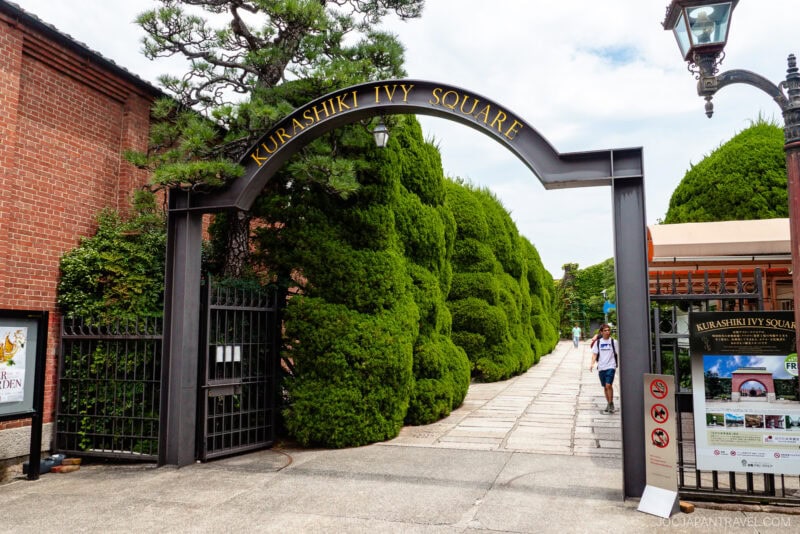
Kurashiki Ivy Square is a must-see for history and design lovers, with Meiji-era industrial buildings, ivy-covered brick walls, artisan shops, and boutique stores near the Bikan Quarter.
A Meiji-Era Mill Turned Cultural Hub
Kurashiki Ivy Square is only a five-minute walk from the Bikan Historical Quarter, yet it tells a completely different story about the city’s past. Once the site of Kurabo’s first cotton mill, founded in 1889, it played a key role in Japan’s early industrialization. The mill shut down in the 1940s, and the buildings sat idle until 1972, when they were restored and reopened as Ivy Square.
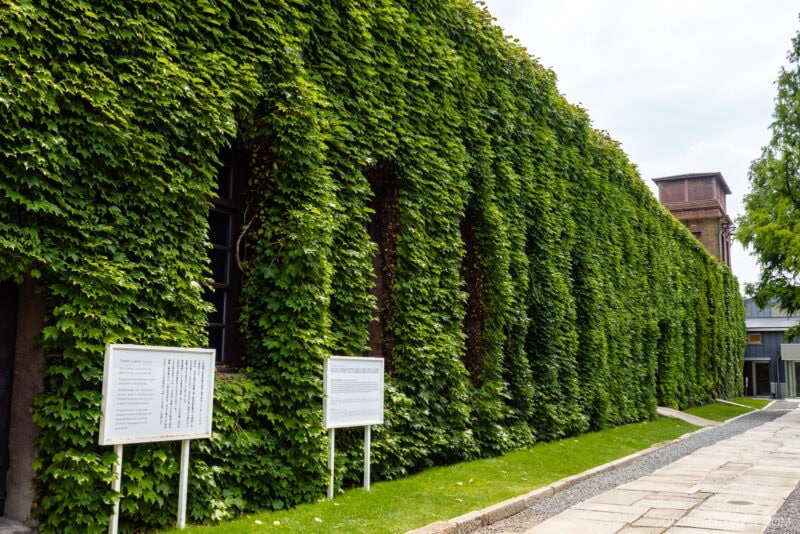
The original red brick walls remain, but decades of ivy growth gave the site its new identity. Today, it’s a welcoming mix of culture, shopping, and history. Inside the complex, we explored:
- A museum showcasing Kurashiki’s textile heritage
- Craft workshops, many tied to weaving and dyeing traditions
- Artisan shops and galleries
- A boutique hotel and casual restaurants set around leafy courtyards
Kurashiki’s Legacy as Japan’s Denim Capital
Ivy Square keeps textiles at the heart of its identity, even though spinning machines no longer run here. Kurashiki and nearby Kojima are recognized as the birthplace of Japanese denim. Local factories began making jeans in the 1950s, combining American influence with Japanese craftsmanship. By the 1970s, Kurashiki denim had gained global recognition for its deep indigo color and artisanal quality.
At Ivy Square, we found small shops selling denim-themed souvenirs, including:
- Indigo-dyed scarves and hand towels
- Handmade denim pouches and wallets
- Craft kits for simple denim projects
- Limited-edition jeans unique to Kurashiki
If you’re passionate about denim, consider adding a trip to Kojima Jeans Street, but even here at Ivy Square, you’ll get a good glimpse into the city’s indigo legacy.
Why We Enjoyed Visiting Ivy Square
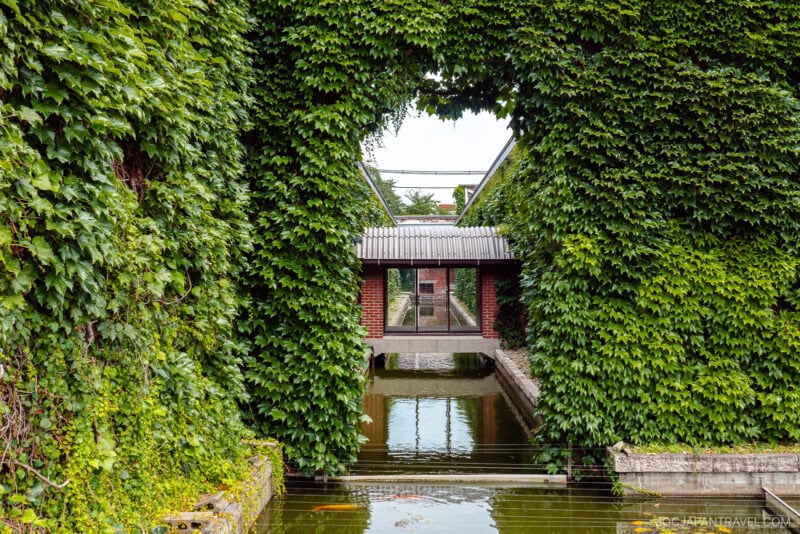
We loved that Ivy Square offered a calm contrast to Kurashiki’s bustling canal district. What stood out most to us:
- Architecture: The ivy-covered brick buildings are striking in every season.
- Craftsmanship: Shops highlight local artistry, from hand-dyed fabrics to thoughtful souvenirs.
- Atmosphere: It’s quieter than the canal area, making it an ideal spot for a relaxed stroll, a coffee break, or photo taking.
For families, it’s a convenient way to experience history, culture, and shopping without venturing far from the main attractions.
How to Get to Kurashiki Ivy Square
By Train
From JR Kurashiki Station, walk 10 minutes south toward the Bikan Historical Quarter. Follow the signs, then continue a few blocks west to the red brick gate.
By Car
From Kurashiki Station The drive is a short 5 minutes. From Okayama Station The drive takes about 30 to 40 minutes.
On Foot from the Canal
From the central canal, head west along the outer streets. Look for the ivy-covered brick walls and the main gate.
Pro Tip: Late afternoon light makes the red brick glow and the courtyards are quieter.
Is Kurashiki Ivy Square Worth Visiting?

Kurashiki Ivy Square adds a unique dimension to the city’s Edo-era charm. Instead of just traditional warehouses and canals, you’ll discover Japan’s Meiji-era spirit of innovation and its enduring textile culture.
We enjoyed the slower pace here, learning about the roots of Japan’s denim industry, and exploring shops where craftsmanship still thrives. For anyone visiting Kurashiki, Ivy Square is a worthwhile stop that ties history, culture, and creativity together in one setting.
More to Explore Nearby
Kurashiki Ivy Square is a unique historical complex housed in the former site of Japan’s first modern cotton mill. Its ivy-covered red brick walls and cultural shops make it a central landmark within the Kurashiki Bikan Historical Quarter. After exploring its unique atmosphere, the region offers a blend of preserved history, regional gardens, and contemporary art.
- Kurashiki Bikan Historical Quarter – Located immediately outside the Ivy Square, explore the core of the merchant town. Enjoy a peaceful boat ride along the willow-lined canal and view the traditional white-walled storehouses (kura).
- Ohara Museum of Art – Just a short walk from Ivy Square, this renowned museum was Japan’s first to display Western art and holds an impressive collection of masterpieces.
- Okayama Koraku-en Garden – Take a short trip to neighboring Okayama City to visit one of Japan’s Three Great Gardens, celebrated for its expansive, elegant landscape and seasonal beauty.
- Naoshima Art Island – Easily accessible via a ferry from nearby Uno Port, this island is a must-see for contemporary art lovers, featuring museums designed by Tadao Ando and iconic outdoor sculptures.