This post may contain affiliate links. Please read our disclosure policy.
With its dazzling architecture, deep samurai roots, and breathtaking views of Suruga Bay, Kunozan Toshogu Shrine is among Shizuoka’s most remarkable sites.

What Is a Toshogu Shrine?
Toshogu shrines are dedicated to Tokugawa Ieyasu (1543–1616), the shogun who unified Japan and ushered in more than 250 years of peace under the Tokugawa shogunate. There are many Toshogu shrines across Japan, but Kunozan Toshogu was the first to be built in his honor.
Unlike the more famous Nikko Toshogu, Kunozan offers a quieter atmosphere and breathtaking views from its mountaintop perch. The shrine claims it is Ieyasu’s true burial site, which gives it deep historical and spiritual importance.
A Brief History of Kunozan Toshogu

When Tokugawa Ieyasu died in 1616, his remains were first enshrined at Kunozan. The shrine was completed just a year later by master craftsman Nakai Masakiyo, whose ornate design later inspired Nikko Toshogu.
Today, the shrine is a designated National Treasure. Though smaller than Nikko, its vibrant colors and rich carvings make it equally impressive.
What We Loved Most
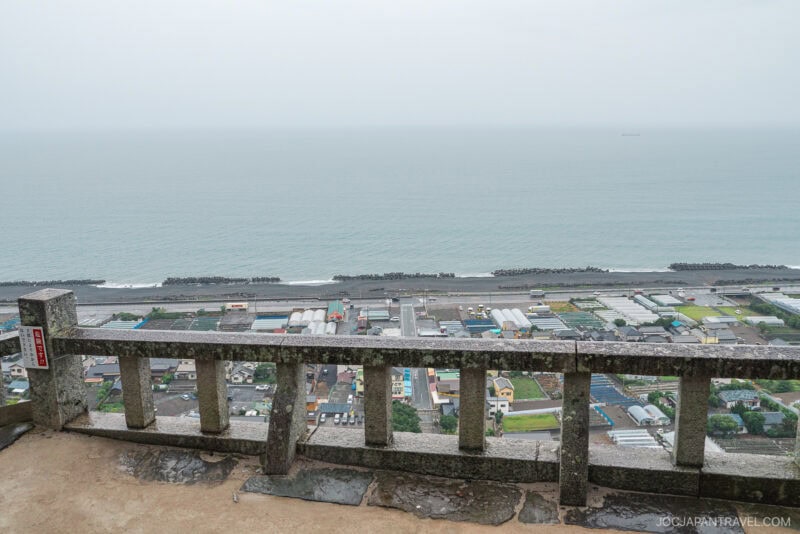
Visiting Kunozan Toshogu felt both intimate and grand. These were our highlights:
- Expansive ocean and mountain views
- Detailed carvings and gold accents that sparkle in the sunlight
- Fewer tourists compared to other major shrines
Climbing the 1,159 Stone Steps

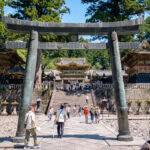
We began our visit at the east-side entrance near the large stone torii gate. From there, the path led to 1,159 steep steps up Mount Kuno. It took us about 40 minutes with plenty of breaks. Reaching the Ichi-no-mon gate at 909 steps felt like a milestone, and the final stretch to the top was surprisingly manageable.
The climb was challenging, but the sense of accomplishment (and the views) made it unforgettable.
Exploring the Shrine Grounds
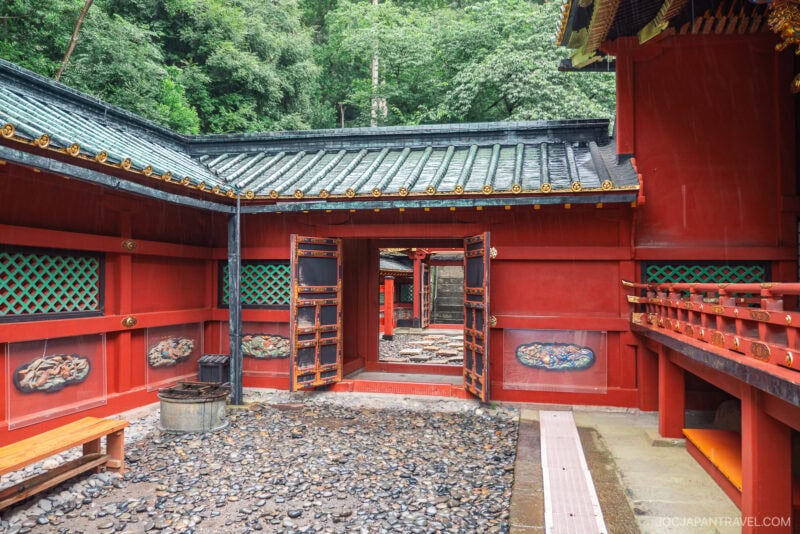
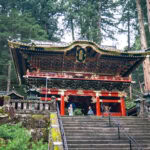
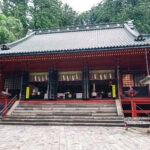
Inside the complex, the Shaden (main shrine building) immediately caught our attention. Its Gongen-zukuri layout, where the worship hall and main hall are connected, is richly decorated with colorful carvings and gold leaf. We also enjoyed passing smaller halls such as the Kagura Hall, Hie Shrine, and Shinko.
Visiting Tokugawa Ieyasu’s Mausoleum

A quiet stone stairway behind the shrine leads to Ieyasu’s mausoleum. The simple, elegant structure faces west, just as he requested.
The mystery remains: are his remains here, or in Nikko? Standing under the towering cypress trees, we felt the weight of history no matter where the truth lies.
How to Get to Kunozan Toshogu Shrine
Climb the Stone Steps
Start at the large stone torii on the east side of Mount Kuno. This entrance is signed as the Ishidan-guchi.
- Steps: 1,159 total. Ichi-no-mon appears around step 909.
- Time: 30–45 minutes, with short water breaks.
- Notes: Stairs can be slick after rain. Wear good shoes.
- Parking: Paid lots are available near the trailhead.
Ride the Nihondaira Ropeway
Board at the Nihondaira Plateau. The ride crosses a valley to the shrine side.
- Ride time: About 5 minutes. Cabins run frequently.
- Walk: 5–10 minutes from the ropeway exit to the shrine gate.
- Parking: Paid parking at the Nihondaira station.
By Public Transit
- From JR Higashi-Shizuoka Station: Taxi to the stone steps entrance. About 15–20 minutes.
By Car
- Drive to Ishidan-guchi for the hike or to Nihondaira for the ropeway. After the hike, we recommend taking the ropeway.
- Allow extra time in peak seasons and on weekends.
Pro Tip: The hiking entrance and the ropeway sit on opposite sides of the mountain. If you park at the hiking entrance, you will not be able to ride the ropeway down and vice versa.
Is Kunozan Toshogu Shrine Worth Visiting?
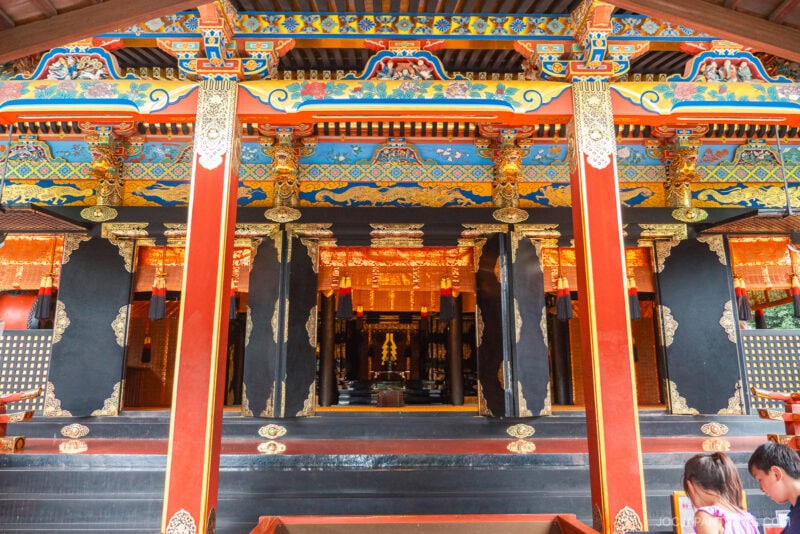
Kunozan Toshogu Shrine is an inspiring mix of history, artistry, and natural beauty. The challenging climb, the shrine’s ornate architecture, and the lingering mystery of Tokugawa Ieyasu’s resting place make it a visit we’ll never forget.
More to Explore Nearby
Kunozan Toshogu Shrine, the final resting place of Shogun Tokugawa Ieyasu, is located in Shizuoka Prefecture, offering spectacular views and proximity to Japan’s most iconic natural landmark, Mount Fuji, and the major metropolitan areas of the Kanto and Chubu regions.
- Mount Fuji – Learn how to best appreciate the iconic views and essential travel information for visiting the region surrounding Japan’s tallest and most sacred mountain.
- Tokyo Station – Master the logistics of this central rail and Shinkansen hub, essential for traveling efficiently across Japan’s major cities, including the nearby Kanto region.
- Hida Takayama – Explore the beautifully preserved old town of Takayama, which offers a glimpse into Edo-era Japan with traditional streets and local specialty foods.
- Shinjuku Gyoen National Garden – Take a necessary break from the city’s neon-lit jungle in this expansive Tokyo oasis featuring meticulously maintained Japanese, French, and English landscapes.