This post may contain affiliate links. Please read our disclosure policy.
The historic Sakurayama Hachimangu Shrine blends seasonal beauty, Shinto legend, and the grandeur of Takayama’s famous festival floats.

A Shrine with Ancient Roots
Sakurayama Hachimangu Shrine (櫻山八幡宮) sits in the quiet northern hills of Takayama, surrounded by cedar trees and mountain air. Believed to be over 1,600 years old, it’s the oldest shrine in the city and still deeply connected to Takayama’s identity.
According to local tradition, it was built by Prince Takefurukuma-no-Mikoto to honor his father, Emperor Ojin. But a more colorful legend says the shrine was founded to protect the area from a mythical two-headed, eight-limbed dragon. That connection to bravery and divine protection helped establish its ties to Hachiman—the Shinto god of war and guardian of warriors.
Today, the shrine remains a spiritual and cultural anchor of the community.
Seasonal Beauty and Unique Design
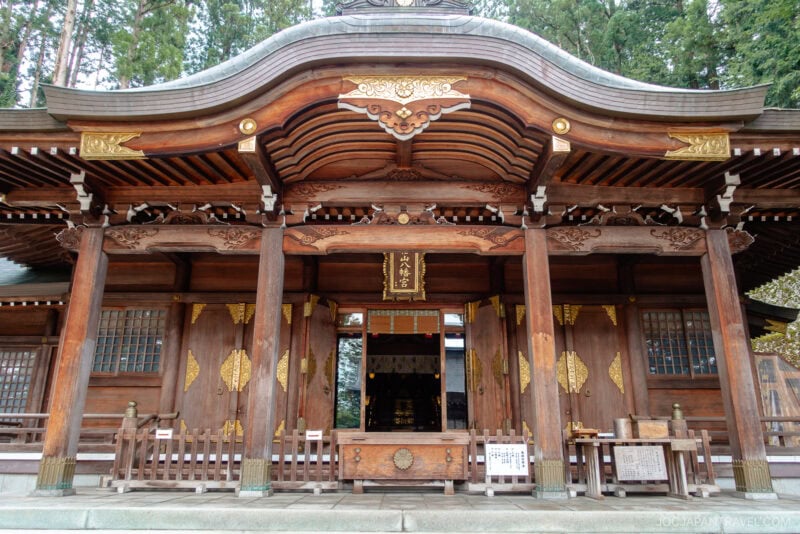
Built to endure the Hida region’s heavy snowfall, the shrine features strong wooden beams, steep roofs, and a rustic design that feels grounded in its mountain surroundings. Each season brings a different kind of beauty.
We came in the early morning and loved how quiet it was. If you’re a photographer or simply looking for a calm place to walk, that’s the best time to visit.
Takayama Festival and the Floats Museum

Sakurayama Hachimangu is the center of the Takayama Autumn Festival, one of Japan’s most celebrated festivals. Every October, the area comes alive with music, lanterns, and tall, elaborately decorated festival floats known as yatai.
Takayama Festival Float Exhibition Hall (屋台会館)
Even if you’re not in town during the festival, you can still experience its magic. Right next to the shrine is the Takayama Festival Float Exhibition Hall. It showcases four of the eleven Autumn Festival floats at a time, all in beautifully preserved condition.
One float that really amazed us was the mikoshi—a portable shrine weighing 2.5 tons that used to be carried by 80 people. These days, they use a substitute float during the festival.
Our favorite was the Hotei-tai, featuring moving puppets of Hotei (the Laughing Buddha) and Karako, a cheerful child. The puppets are controlled by 36 strings and operated by a team of eight performers. Watching them move during the festival must be magical.
Some floats also feature rare antiques, including Ming Dynasty scrolls. Each one is stored in its own warehouse (yatai gura) to protect the craftsmanship and history behind it.
How to Get to Sakurayama Hachimangu Shrine
On Foot
- From JR Takayama Station, exit the east side and walk north until you reach Route 158. Continue straight on Route 158 and cross the Miyagawa River. After crossing the bridge, turn left and follow the road along the river until you see the large torii gate of the shrine.
- Total travel time: 15–20 minutes on foot.
Taxi
- About ¥800–¥1,000 from JR Takayama Station. Ride takes around 8 minutes.
Is Sakurayama Hachimangu Shrine Worth Visiting?

Yes! This shrine has such a rare mix of peaceful vibes, nature, and local festival culture.Whether you’re exploring Takayama for the first time or returning in a different season, Sakurayama Hachimangu adds depth to any trip.
More to Explore Nearby
After visiting Sakurayama Hachimangu Shrine and learning about the Takayama Festival floats, explore more of the city’s cultural heritage:
- Takayama Festival Float Exhibition Hall – Right next to the shrine, this museum displays ornate floats used during the autumn festival.
- Kusakabe Heritage House – A beautifully preserved merchant residence showcasing Edo-period architecture.
- Miyagawa Morning Market – Browse local produce, pickles, and handmade goods along the riverfront.
- Takayama Old Town – Wander through historic streets lined with traditional shops and sake breweries.