This post may contain affiliate links. Please read our disclosure policy.
Located just steps from Odori Park, Nijo Market is a lively place to enjoy Hokkaido seafood, shop for local produce, and savor a seafood bowl on the spot.
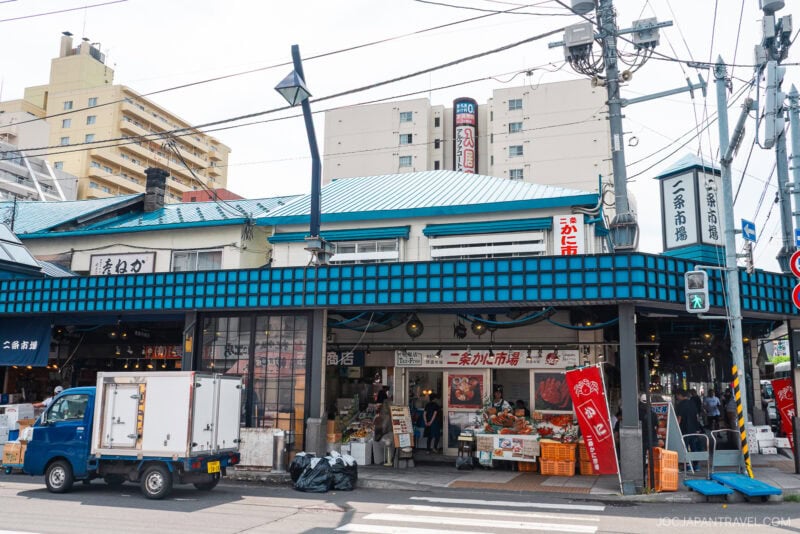
A Historic Market in Central Sapporo
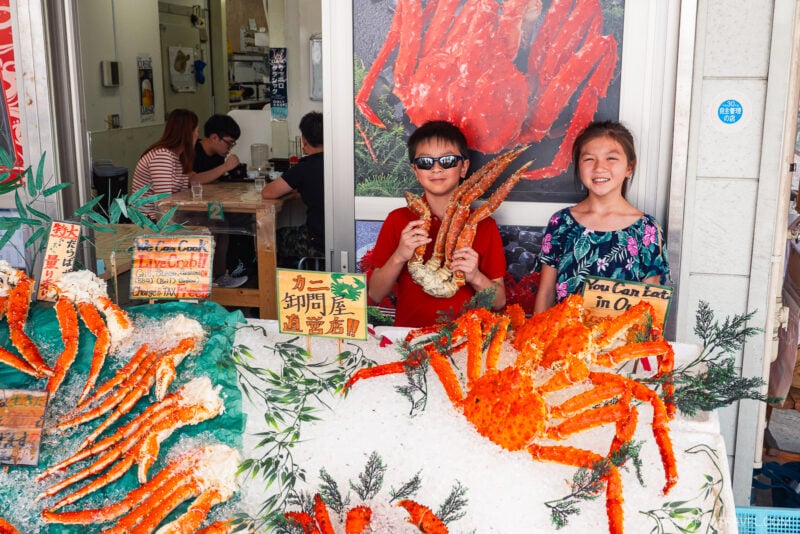
Nijo Market has been part of Sapporo life for over a century. Spread across a few narrow streets, the market may be small, but it’s packed with character. We wandered past tanks of live crabs, trays of fresh sashimi, and piles of seasonal produce. The atmosphere was lively yet approachable, with vendors calling out greetings and signs in multiple languages to help visitors.
Most of the seafood here is locally caught from the Sea of Okhotsk, the Pacific, or nearby coastal towns. Alongside the famous crabs, you’ll also find scallops, uni, salmon roe, and even Hokkaido melons and corn. For us, it felt like a snapshot of Hokkaido’s food culture all in one place.
Dining at the Market
One of the best reasons to visit is the chance to eat right on site. Small restaurants and food stalls tucked inside the market serve a variety of seafood dishes.
Popular options include:
- Kaisendon (seafood rice bowls) topped with tuna, salmon, ikura, and uni
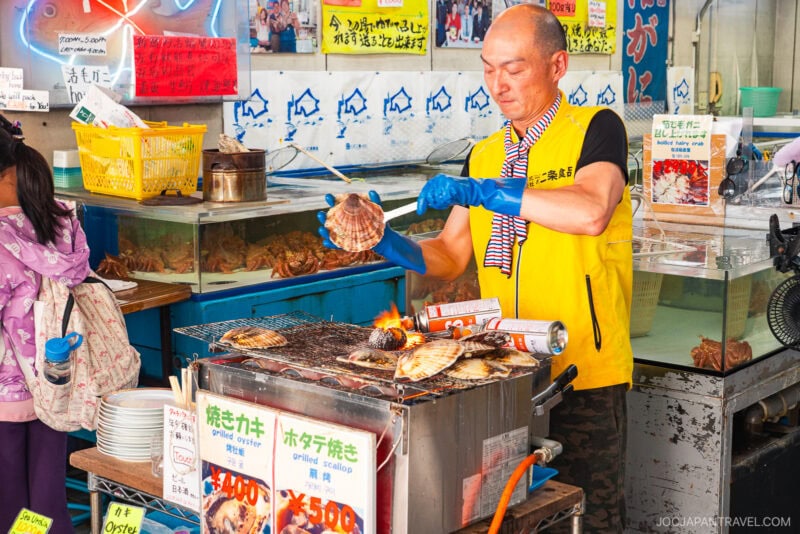
- Grilled scallops and oysters prepared at the stall
- Seasonal items such as sweet corn and crab miso soup
We shared a seafood bowl with scallops, salmon, and ikura, and it was so fresh that it barely needed soy sauce. Sitting down for a quick meal surrounded by the bustle of the market made the experience even more memorable.
Shopping for Your Own Feast
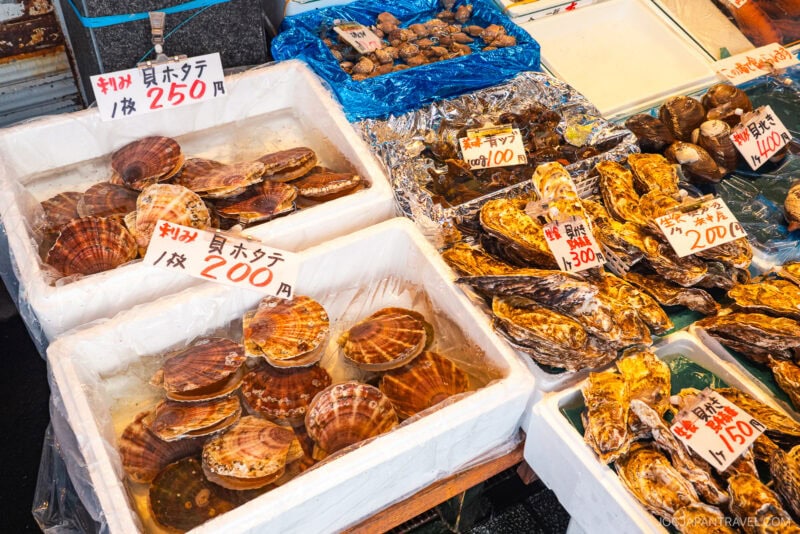
If your accommodation has a kitchen, Nijo Market is an excellent place to stock up. Many vendors will steam or cook crab for you, pack seafood for travel, or even slice sashimi to take out. We noticed how willing the shopkeepers were to help, offering tips on how to prepare dishes at home. It felt both practical and fun to browse with the idea of making our own Hokkaido dinner.
Do keep in mind that some shops have signs asking visitors not to take photos. Ignoring these rules may result in an unhappy encounter with the shop owner.
How to Get to Nijo Market
Nijo Market sits just east of Odori Park in central Sapporo.
Subway
- Odori Station (Namboku, Tozai, Toho) Exit 34. About 5 minutes on foot.
- Bus Center mae Station (Tozai) Exit 3. About 5 minutes on foot.
- Hosui Susukino Station (Toho). About 5 to 8 minutes on foot.
Taxi/Car
- A taxi from Sapporo Station is about a 5 minute ride. The fare is around ¥1,400 to ¥1,800.
Pro Tip: Go in the morning for the freshest seafood and fewer crowds. Many shops close by early afternoon.
Should You Visit Nijo Market?
Nijo Market is one of the best places to experience Hokkaido’s seafood culture up close. Compact, easy to explore, and full of local charm, it’s perfect for grabbing a quick kaisendon, picking up souvenirs, or choosing fresh ingredients for dinner. The freshness here is hard to beat, and for our family, it was a fun and memorable taste of Sapporo.
More to Explore Nearby
Nijo Market, often called “Sapporo’s Kitchen,” is an energetic center for fresh seafood and local produce. Once you’ve sampled the best of Hokkaido’s sea harvest, the market’s central location provides easy access to the city’s main shopping, entertainment, and historical landmarks.
- Tanukikoji Shopping Street – Explore Sapporo’s oldest and most famous covered shopping arcade, offering hundreds of shops, souvenir stores, restaurants, and bars under one roof.
- Odori Park – Head north to discover the city’s beautiful central green space, which stretches for over a kilometer and serves as the main venue for major seasonal events.
- Sapporo TV Tower – Walk to the eastern end of Odori Park to visit this iconic structure, where you can ride up to the observation deck for spectacular views overlooking the entire city.
- Sapporo Clock Tower – Take a short walk to see this famous, historical wooden building, one of Sapporo’s most recognized symbols of its early architectural heritage.